
I Am... Easy Authentic Chicken Pho
I'm Vietnamese and this is my comfort food: a super flavorful, very authentic chicken pho that takes about 3 hours to make. This is my personal chicken pho recipe that I've been refining for the past 10 years. It's different (and less accessible) than the easier one in our cookbook. I'm finally putting it up because Steph wanted to be able to make it rather than ask me to do so every time she craved chicken pho. It's aromatic, refreshing, light, and deeply satisfying. It takes a little bit of effort but I think it's worth it. You might even skip the restaurants after this one.
A personal recipe
This is going to be an old school blog post. Back in the early 2010s when blogging was a bigger thing, before tiktok, everyone seemed to be doing over-the-top giant multi-hour project recipes. Blogging went from headlines like 72-hour Slow Roasted Beef Rib Pho with Homemade Rice Noodles to Easy Best 15 Minute Pho. Steph and I are no less guilty of this, but I feel like we lost something along the way. This post is definitely not designed to rank high on search. Instead, it's the most delicious pho recipe that I know how to make.What is chicken pho (phở gà)
Chicken pho is a less well known though no less authentic version of pho. It has roughly the same flavor profile, but is lighter, healthier, and faster and cheaper to make. If you love pho, you owe it to yourself to try a great chicken pho. It's like steak vs fried chicken, both are equally delicious.Equipment
For this recipe the following equipment isn't strictly needed but guarantees an easy experience:- A large stockpot. You'll need a pot that's large enough to hold a whole broken down chicken plus an onion and ginger. Most of the stockpots that come in those 7 piece sets are just large enough, but the bigger the better.
- A kitchen torch. I use a full-on blowtorch. You can toast the spices some other way (like in a cast iron pan) but it won't be as smoky and delicious.
- Tongs. We'll be moving a lot of chicken around, and tongs are the best cooking utensils for this. If you have metal tipped ones, you can use them to debone the chicken after it's been cooked rather than a knife and fork.
- 2 large mixing bowls. I use these to transfer the chicken, debone the chicken, weigh the noodles, etc.
- Sieve and 4qt container. To strain the soup. We own and love these 4qt cambros (shown below) that you can get from any restaurant supply store or online. They're useful for soup making, of course, but also storing large amounts of leftovers and general storage. Steph uses a larger 10qt one just for her instant noodle library.
- Noodle Bowls and Chopsticks. To serve and eat, more on that below.
How to make chicken pho
Although I'm talking up how difficult this recipe is, it's not really that complicated. Here's how you make chicken pho:- Char your aromatics. Char your onion and ginger for about 10 seconds. I use a blowtorch, but a small kitchen torch will work too. Transfer to your large stockpot. Pro tip: leave the hood fan off because this process creates some ash and the hood fan sucks it right into the filter if you have it on.
- Briefly char your spices. Just about a second is enough. Then transfer to a tea bag if you have one and add to the stockpot
- Add chicken and cover with water. Bring to a boil. Note the time that the soup has come to a boil.
- Remove the chicken and cool. About 25 minutes after the soup boils, remove the chicken and allow to cool. Keep the soup at a low simmer and add water if needed.
- Debone the chicken. About 15 minutes later the chicken will have cooled enough to handle. Roughly remove the meat from the bones. You don't need to work too hard on this, any meat left over just helps flavor the soup. Transfer the meat to a container, cover, and refrigerate.
- Simmer the soup. Add the bones back to the soup and simmer for 30 mins to 2 hours. The longer the better, obviously.
- Strain the soup. I've found that removing the bones and larger pieces makes straining easier.
- Season the soup. This is a pretty personal thing but I've included my suggestions in the recipe.
- Build your bowls and enjoy. Instructions below.
How to serve chicken pho
Serving any noodle soup so that everything is hot and ready at the same time (and not soggy) is an art form. Pho is one of the easiest noodles in this respect because the noodles are better the longer they sit out, and the soup goes in last. This is my method:- Optional: warm the bowls
- Bring the soup to a low simmer in one pot and bring up a large amount of boiling water in another large pot.
- Blanch the noodles according to the instructions on the package. For fresh noodles you dip it in boiling water for 1-2 seconds and drain immediately. For dry noodles it can be as long as 5 minutes depending on the thickness of the noodles, but usually 1-2 minutes.
- Drain and rinse the noodles in a mesh sieve. Unlike pasta, rinsing the noodles removes the residual starch and gives you a cleaner end product.
- Divide the noodles. If you are making more than 2 bowls at a time, it's worth it to weigh and divide the noodles in a (tared) large mixing bowl. Let the noodles rest in the bowls. They'll dry out a bit and when you add the soup they absorb a little bit of the soup and become tastier.
- Warm the chicken in the soup and divide between the bowls.
- Set up your garnishes, dips, chopsticks, spoons, drinks etc at the table.
- When everyone is ready to eat, add enough soup to the bowls to cover and carefully bring them to the table. You can optionally bring the whole pot to the table and ladle it there, which is useful in case extra soup is needed.
Chicken pho ingredients
- Chicken. This recipe was originally made to use up exactly one whole chicken. Back in the day, I would break down a whole chicken. These days, I'd rather spend a few extra dollars and buy chicken parts. My current perfect mix is 4 drumsticks, 4 thighs, and a bone-in skin-on chicken breast.
- Spices. You need about 6 spices to make this recipe, more on that below.
- Aromatics. I whittled the list down to just 1 onion and some ginger. A lot of other people will add shallots, the whites of green onions, even carrots and celery. I don't personally feel like this is necessary but you could, if you like.
- Seasoning. For Vietnamese recipes, this is sugar, fish sauce, salt, and MSG. The MSG is optional but I personally love it for authenticity reasons. Much has been said lately about MSG and racism (all true) but I make the MSG is optional for another reason: if you don't already use it, it's hard to find it in a small amount. If you run into the cute MSG panda though, I'd recommend getting that.
- Noodles. More on pho noodles below.
- Garnishes. Skippable but recommended. You can omit the traditional sriracha and hoisin for this one as well.
Discarding the chicken
This recipe specifies removing the chicken 30 minutes in, harvesting the meat, and then transferring the bones back in. This is admittedly a labor-intensive step. If you are super lazy and rich, you could in theory just leave all the chicken in, and then in the last 30 minutes drop in a few boneless skinless chicken breasts for serving, and discard the rest. For me, that's a bit too much of a waste to consider doing. A good middle ground would be buying chicken carcasses, which you can sometimes get from an Asian grocery store and definitely from any decent butcher. Then afterwards, drop in the chicken breasts as above. Some chefs like Thomas Keller and Ivan Ramen straight up tell you in their cookbooks to boil a whole chicken for a couple of hours and discard. My Vietnamese sensibilities could never, though.The spice pack
Getting the spices are generally the hardest part of making pho at home. Pho spices are intensely personal. In some cities there are (or were) pho masters who went around to all the different pho restaurants selling custom spice mixes so that the restauranteurs could guarantee quality and uniqueness. The spices are what makes pho special for me. A lot of pho recipes online seem to skip the spices entirely, I wouldn't trust those recipes. On the other hand, many pho recipes can contain up to a dozen spices. Over the years I've whittled down my spice pack to just 6 spices: star anise, cinnamon, coriander, white pepper, cloves, and cardamom. All of these spices are ideally whole, not ground. Whole star anise in particular can be hard to find outside of Asian grocery stores and online.Charring
The word pho is often said to come from the French phrase pot au feu and the reason was the charring of the aromatics and spices. If you don't have a flame source, you can skip this step but it worth chasing down at least a cheap kitchen torch. These butane toppers are also usually about $10 and the butane gas itself is about $1.50 a can. For me, I pair the classic bernzomatic TS-8000 that's found in restaurant kitchens across the world with a green coleman propane can for a less industrial/plumbing look. They don't take up much room when stored separately. We use it more often than you'd think, including when camping to easily start a campfire. The bernzomatic brand is an industry standard and priced as such, but there are identical looking clones online for cheap, though I can't vouch for how good they are.Garnishes
Of anything in this recipe that you can skip, I'd say the garnishes are the most optional. Pho is traditionally served with lime, cilantro, thai basil, and chilies. It's up to you if you want to go with these or not, when we're lazy we often skip them all. The soup is great as is.Fish sauce
If you don't intend to make the dipping sauce and you don't want to buy fish sauce, this recipe works without it. Fish sauce adds a depth of flavor that you can't get with just salt. However, many a Vietnamese household makes pho with just salt for a cleaner, more chicken forward taste. If you want to skip the fish sauce, just add the equivalent amount of salt to replace it (or as much/as little as your taste prefers). For this recipe (and all seasoning purposes) I prefer a cheaper brand like Golden Boy over something like Red Boat. Unless you have it already, a high end fish sauce here would be a waste of money, like using high end olive oil to fry.Dipping sauce
This recipe comes with a ginger fish sauce-based dipping sauce. I think it really makes the dish. Even though we traditionally only use ginger fish sauce with poultry, I love it so much we use it anywhere a fish sauce dipping sauce is called for. The ginger isn't an exact measurement because who weighs ginger? Generally speaking, err on the side of more ginger than you'd expect. How much I use is illustrated in these two before/after photos. If grating ginger and chopping garlic is not your thing (it's not mine), you can blend the ginger and garlic together, then add to sugar, fish sauce, and chilies. I find doing it this way creates more dishwashing but makes it much faster and easier.Pho noodles
The best kind of pho noodles you can buy are fresh rice noodles. They're usually stored in the fridge at your local Asian grocery store near the tofu. These noodles are what your local pho restaurant uses and their texture is great. You can also get dried rice stick noodles in the Asian aisle at any major grocery store. Sometimes it's called pad thai noodles. Their texture isn't as good but it works. We've used fettuccine in a pinch before.Noodle bowls
The hardest thing about making pho in a non Asian household/kitchen is that most people don't have noodle bowls. The ideal noodle bowl is at least 6" wide and 5" high. Our collection has bowls from East Fork, Kinto, and Farmhouse Pottery, as well as tons of other random ones we picked up over the years. You can also get some great basic bowls from your local Asian grocery store or online. Bonus, they make great cereal bowls (and are often what they're marketed as). When I was younger and couldn't afford noodle bowls, I ate out of mixing bowls. That's what we still do when we eat pho in airbnbs, and it works.Asian supermarkets
Throughout this post I mentioned the Asian supermarket a lot, and that's because the best place to stock up on supplies for pho is here. You'll get cheaper meat, reasonably priced whole spices, a wider selection of fish sauce, and fresh noodles quickly and easily. You can still cobble this recipe together if the only place in your town is a Ralphs or Kroger. However, if you have a 99 ranch or T&T or similar near you, the experience is just so much better.Other Vietnamese recipes to try
- Easy Instant Pot Pho
- Vietnamese Lemongrass Beef
- How to Make Vietnamese Salad Rolls
- Air Fryer Vietnamese Fried Chicken
- Bun Bo Hue
- Vietnamese Coffee
Authentic Chicken Pho
It takes 3 hours and a whole chicken and it's 100% worth it.
- 1 onion (halved)
- 3" ginger (sliced)
- 5 lbs chicken (4 drumsticks, 4 thighs, 1 whole breast, bone-in, skin on)
- 2 lbs fresh pho noodles (or dried)
Spice Pack
- 1 stick cinnamon
- 2-3 whole star anise
- 1/2 tsp coriander
- 1/2 tsp white pepper
- 1/2 tsp cloves
- 1/2 tsp cardamom (about 8 pods)
Seasoning
- 1/4 cup sugar
- 2 tbsp coarse sea salt
- 1 tbsp fish sauce (optional but replace with equivalent salt if omitting)
- 1 tbsp msg (optional)
Garnishes (all optional)
- 1 lime
- 1 bunch Thai basil
- 1 bunch cilantro
- 2-3 Thai chilies (sliced)
Carefully char your aromatics with a blowtorch or over a gas hob. Set aside. In a small pan, char your spices and add to a tea bag if you have on. If you don’t have a blowtorch or flame source, you can toast your aromatics in a cast iron pan as well.
Add the chicken, onion, ginger, and spices, and cover with water. Bring up to a boil on high heat. Once boiling, reduce to a low boil and set a timer for 25 minutes.
At the end of the 25 minutes, transfer your chicken to a large bowl and let cool. Continue cooking the soup, adding water if needed. Once the chicken is cool enough to handle, roughly remove the meat from the bones, transfer to a container and refrigerate.
Add the bones back to soup and continue to simmer for another 30 minutes to 2 hours. More time will make a better soup.
Let the soup cool to a safe temperature (add 1qt water to help it cool), then strain (remember to put a container under your sieve). Ensure the soup has about 3 quarts of liquid, adding water if necessary.
Give the pot a quick rinse, then return the soup to the pot. Heat up the soup again, then season to your liking with sugar, fish sauce, salt, and msg as desired (my recommendations are up top).
To serve: quickly blanch your pho noodles according to the directions on the package, then transfer to large noodle soup bowls. Warm the chicken in the soup, then evenly divide the chicken between the bowls. Just before you're ready to eat, top with soup, thai basil, chilies, and cilantro, if using. Serve with ginger fish sauce to dip. (see below)
Serves 6 as smaller bowls, or 4 as larger bowls. Estimated nutrition assumes about 5oz of noodles per person, 1/4lb of chicken, and consuming all/most of the soup.
Ginger Fish Sauce Recipe
2" grated ginger
3 tbsp sugar
4 cloves garlic, crushed
2 tbsp fish sauce
1-2 thai chilis (optional)
1/2 cup water
Combine all ingredients in jar, cover, and refrigerate for 30 minutes before using.
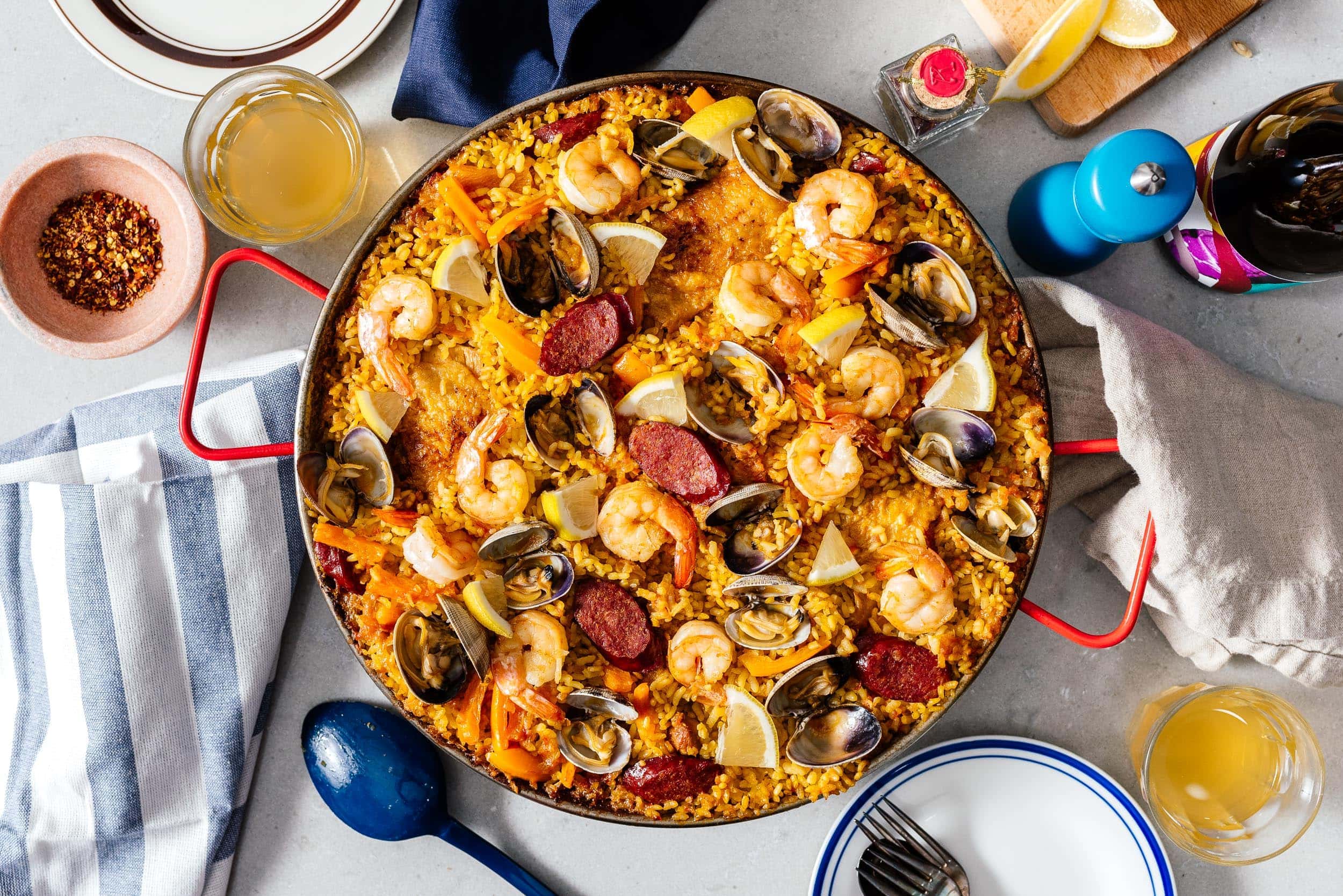
I Am... This easy Paella recipe is a perfect weekend project
Paella has bits of everything I love: rice, seafood, and most importantly socarrat: crispy crunchy toasted rice bits. Have you ever been obsessed with a dish even though you’ve never eaten it? For me, that dish was paella. It was one of those food bucket list items – I don’t remember how or why I became so obsessed with having paella from its birthplace of Valencia, but I’m pretty sure it has something to do with the fact that paella is so pretty and such an iconic dish. It’s so iconic that people around the world think of it as the quintessential Spanish dish, even though it’s actually more Valencian. I mean, Valencia is ultimately in Spain, so it’s all good to me. Many years ago, Mike and I went to Valencia and the first thing we ate was paella. We literally got off the train and went to a paella restaurant. On the way there, there were a bunch of Valencian orange trees that had some pretty tempting looking oranges but apparently the orange trees that line the streets of Valencia are not the same sweet ones that they use for juice. Anyway, the paella in Spain was as good as I imagined. So good that all of our meals in Valencia were either paella or Spanish churros dipped in chocolate. We actually ate 3 different paellas that day. The paella was all things good: juicy seasoned meats, tender-crisp beans, and the best part, saffron scented rice with crispy toasty rice bits. It was a dream come true.
What is paella?
Paella, pronounced pay-EH-yah! is a rice dish made in a shallow, wide pan over an open fire. Paella means “frying pan” in Valencian. Traditionally, paella includes short grain rice, beans, rabbit, chicken, and saffron, but nowadays there are a huge number of variations, from seafood to vegetarian. I made a mixta paella here, which is essentially a mixed paella that has meat, seafood, and vegetables.How to make paella
- Soak the saffron. This will release both color and aroma. Pop some saffron into a small bowl with hot water and set aside.
- Sear the proteins. Heat up some olive oil in your paella pan over medium high heat and give your proteins a quick sear: the chicken goes in skin side down and the chorizo gets browned. Shrimp gets a quick toss in before being removed so it doesn’t over cook.
- Sweat the aromatics. Add the onions, garlic, tomatoes, and paprika and cook, stirring, until soft and fragrant.
- Add the liquids. Carefully add chicken stock and the saffron water and bring everything to a boil. Flip the chicken skin side up so it’s pretty.
- Add the rice. Time to sprinkle in the rice! Try to add it in a thin, even layer and use a spoon to spread it out if you need to. Let everything come to a simmer and cook, uncovered until the rice absorbs almost all the liquid.
- Add the seafood. Nestle in the clams and add the shrimp back on top.
- Cook on low until the clams open up and the rice is al denote.
- Socarrat time! Turn the heat up to high for 1-2 minutes to create a crispy toasty crunchy rice crust.
- Rest and enjoy. Cover the paella with some foil and let rest for 5 minutes before enjoying.
Paella Ingredients
Rice
Because paella is truly all about the rice, the rice is the most important ingredient. Bomba rice, from Spain, is the best choice. It absorbs 3 times as much liquid than regular rice giving it 3 times as much flavor when all the liquid is absorbed. Plus cooked right, it stays firm and al dente. You can usually find bomba rice at Whole Foods or online.Smoked Spanish Paprika
Smoked paprika comes in sweet and bittersweet, go for sweet smoked Spanish paprika. It adds smokiness, aroma, and color.Protein
There’s a lot of controversy about what kind of protein goes into paella. If you’re not super concerned about authenticity you can customize your paella and put anything you want it. If you’re going with chorizo try to get a Spanish chorizo, which is dried and cured. But if you only have Mexican chorizo available, I think that’s okay too. Purists say that chorizo will overwhelm the other flavors, but we’ve had multiple paella in Valencia with (and without) chorizo, so it’s a personal choice. Other proteins you can use include chicken, pork, seafood, or really, anything you can dream of.Vegetables
Most paella has vegetables in it, especially the paella we had while we were in Valencia. Usually it’s some sort of green bean, a variety that isn’t so common here in North America. You can sub in other green beans, add peppers, asparagus, artichokes, peas, olives, beans, chickpeas, really, it’s like the proteins, go wild!Stock
A nicely seasoned stock as this is what’s going to add flavor to the insides of your bomba rice. That being said, if you’re salt adverse, I would do low sodium stock and then season afterwards. If you have the time, make a homemade seafood/shellfish or chicken stock, which makes it even easier to control the seasoning and flavor.Saffron
Saffron is what gives paella its gorgeous golden hue. The orange-red threads are earthy, floral, and add a distinct flavor. Saffron is one of the most expensive spices in the world. You only need about 1/2 teaspoon but it definitely adds to the overall flavor, so don’t skip out on it. Look for saffron threads that are deep red-orange and evenly colored. Saffron is sold in most large grocery stores and specialty food stores and of course, online.Paella pan
If you want the all important toasty rice bits, or socarrat, you’re going to need a paella pan. The width of a paella pan helps with rice distribution, ensuring that the rice cooks in a thin layer. A pan that feeds two is generally about 10-12 inches and a pan that serves eight is about 18 inches. The most popular pan sizes are 14 and 16 inches, which feed 4-6. Which size pan you get depends on how many people you plan to feed. The wider the pan, the more people it feeds. They even have pans that are 4 feet wide! Years ago, around Christmas, Mike and I were in London and we saw two giant paella pans at Covent Garden. The saffron deliciousness wafting through the chilly air was so tempting so we decided to join the huge queue for a taste. I’m sure Hola Paella (now closed forever) wasn't the most authentic paella in London, but it attracted a lot of attention and was a perfect snack to warm us up on a cold day.What if I don’t have a paella pan?
If you’re wondering, can I use a cast iron skillet to make paella, the answer is yes! As long as you’re using the right rice, you can definitely use a cast iron skillet. Cast iron skillets are somewhat wide and conduct heat well, making them great for making paella. Use the biggest and widest cast iron pan you have so you can spread your rice out.Paella in a frying pan
If you have a craving for paella and you don’t have a paella pan or a cast iron pan you can make it in a frying pan. Spanish people might look down on you, but hey, you do you! I’ve definitely made paella in a frying pan in a pinch and it tastes good. You can use a non-stick or regular frying pan but if you’re using non-stick, make sure you don’t go too high on the heat. It really shouldn’t be a problem, especially with paella since you don’t use a huge amount of high heat anyway - keep it to medium high. If you’re looking for socarrat in a regular frying pan, my tip is keep it on low heat for a long time, until the moisture cooks out and you get crispy bottoms. If you are going to try this in a frying pan, I recommend halving it because the recipe as per below will not fit in your standard 12 inch frying pan.What rice should I use?
Paella should be made with Bomba or Calasparra rice, medium grain rices grown in Spain. Spanish rice is chubby and round, ideal for absorbing large amounts of liquid while still staying somewhat firm. You want your rice kernels stay separate and not creamy or mushy. The rice really is the best part of a paella. I can eat loads and loads of that smoky, saffron flavoured rice and I have. I made a giant pan for Mike, myself and a good friend thinking there would definitely be leftovers (I used a pan that serves 6-8), but the three of us polished it off in one sitting. We totally fell into simultaneous food comas afterwards, but it was worth it. The best part was that there was more than enough socarrat to go around.What is socarrat?
Socarrat is the essential layer of crispy crunchy toasted rice at the bottom of the pan when you cook your paella just right. Most people consider it the best parts. It’s caramelized and toasty and nutty and has all the flavors of paella concentrated.Paella FAQ
What are the different kinds of paella?
- Valencian: The classic Valencia version with rabbit, chicken, lima beans, long beans, snails, and rosemary.
- Seafood/paella de marisco: A seafood version with no meat. It tends to be a bit more liquidy because seafood releases a lot of delicious juices. It usually has prawns, mussels, calamari, and clams.
- Mixed/mixta paella: A mix between Valencian and marisco with meat and seafood. It’s the most popular of all.
- Paella negra: Immediately recognizable with it’s inky black rice. It’s made with squid ink and is a Spanish favorite.
- Vegetarian/paella vegetariana: Loads of vegetables like artichokes, lima beans, and red and greens peppers. Sometimes you’ll find chickpeas and potatoes too.
Should you presoak the rice?
There’s no reason to soak the rice. Soaking the rice will make it more likely to be overcooked and mushy.Do you stir while cooking?
Nope, no stirring required. Paella is not risotto and stirring will give your rice a creamy texture instead of the crispy socarrat you’re looking for.Do you cover the pan when cooking?
Unlike other rice dishes, you don't need to cover the pan. The rice can only reach its signature al dente texture if the moisture can escape. This also makes the best the crispy socarrat.What is paella sauce?
In Valencia, no paella is complete without a side of paella sauce or garlic aioli. The creamy, garlicky sauce is reminiscent of mayo and goes perfectly with the smoky, flavorful rice. To make garlic aioli, place 1 cup neutral oil, 1 egg yolk, 1 tbsp dijon, 2 tsp lemon juice, and 1 clove garlic into an immersion blender cup. Use an immersion blender and blend until combined and thick. Season with salt to taste.How to reheat
The best way to reheat paella is in a pan on the stove top. Take the leftovers out of the fridge and let it come to room temp for about 30 minutes before you reheat. Heat a bit of oil in a frying pan over medium heat, then spread out the paella. Let it crisp, stirring occasionally until it is heated through. You can also heat it up in the microwave, stirring and heating as needed, about 1-2 minute on high.What else can I use a paella pan for?
You can use it for cooking anything that will do well with a wide, flat cooking surface. It’s perfect for searing meats, using as a roasting pan, or even stir-fry. I hope you guys give this recipe a try. smoky saffron rice and crispy bits forever, xoxo stephPaella Recipe
Paella even has its own emoji!
- medium-sized paella pan
- 30 threads saffron (lightly crushed, about 1/2 tsp)
- 1/4 cup neutral oil (high heat such as grapeseed preferred)
- 2 links Spanish chorizo (sliced)
- 4 bone in skin on chicken thighs
- 10-12 large shrimp (peeled and deveined)
- 1 small onion (minced, about 1 cup)
- 3 cloves garlic (crushed)
- 3 medium tomatoes (diced or grated, about 2 cups, see notes)
- 1 tbsp smoked paprika
- 6 cups chicken broth (no sodium preferred)
- 2.5 cups bomba rice
- 1 red or orange pepper (sliced into 1" strips)
- 12 clams
Stir the saffron into 1⁄4 cup hot water in a small bowl and let bloom for 15 minutes.
In a 16″–18″ paella pan, heat the oil over medium-high heat. Add the chorizo and the chicken, skin side down. Add the the shrimp and cook, flipping occasionally, until browned, about 5 minutes, then transfer the shrimp to a plate, leaving the meats to sear in the pan.
Add the onions, garlic, tomatoes, and paprika and cook, stirring often, until the onions soften, about 6 minutes. Add the saffron and 4 cups of chicken stock. Flip the chicken so it’s skin side up and bring everything to a boil over high heat.
Sprinkle in the rice, distributing evenly, then add the peppers on top. Cook, uncovered, without stirring, until rice has absorbed most of the liquid, about 12-15 minutes. If the pan is larger than the burner, rotate it every two minutes to evenly distribute the heat. Once the stock is low enough, add the remaining 2 cups chicken stock.
Reduce heat to low, and top with the cooked shrimp. Nestle in the clams, hinge side down. Continue to cook, without covering or stirring, until the clams opened and the rice absorbs the liquid and is al dente, 5–10 minutes more. Turn heat to high for 1-2 minutes to create the socarrat. Remove pan from heat, cover with aluminum foil, and let sit for 5 minutes before enjoying.
Paella is totally customizable so feel free to make this dish vegetarian, all seafood, or all meats.
You also can grate the tomatoes on the largest holes of a box grater. Be careful and discard the skin afterwards.
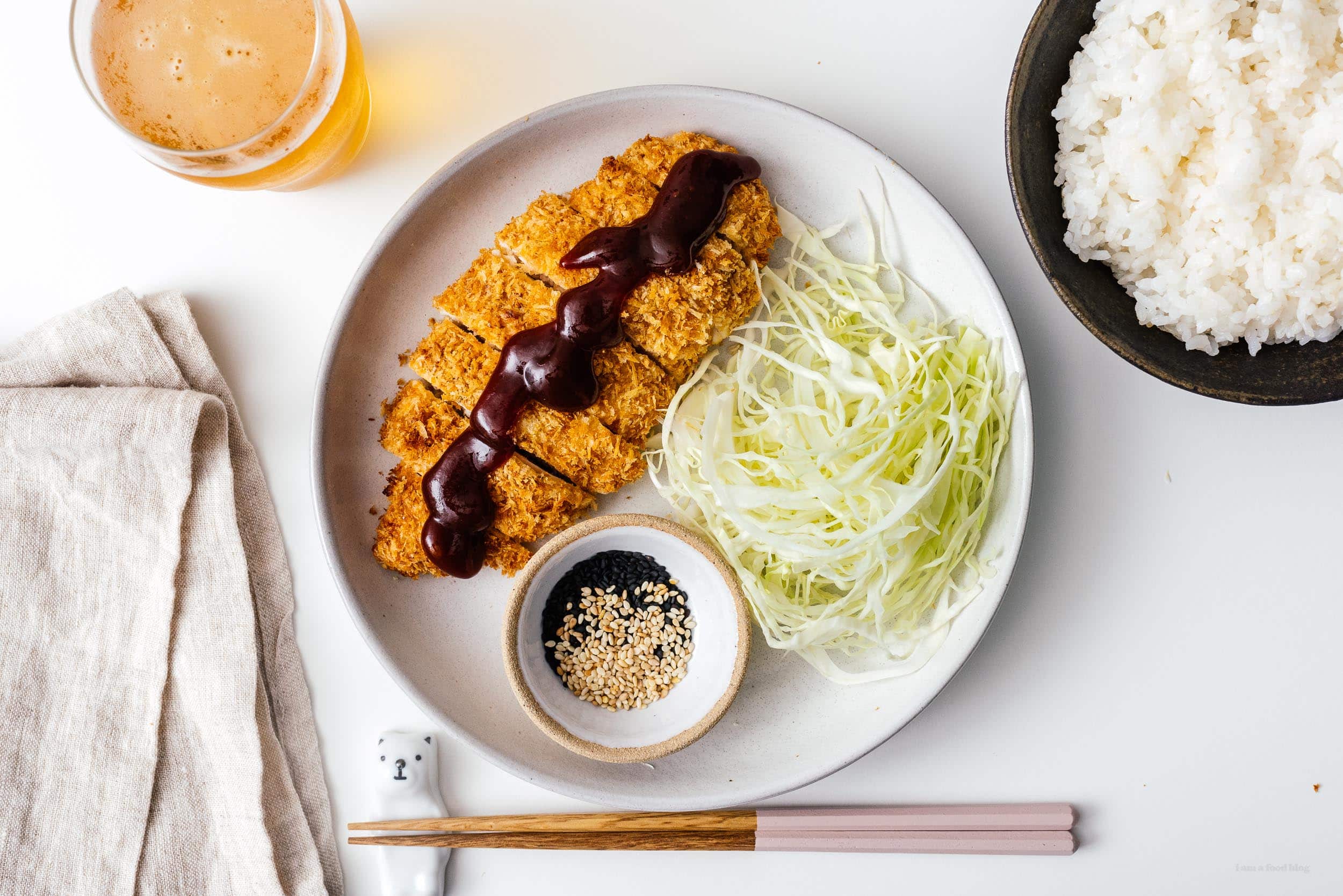
I Am... Make this Easy Chicken Katsu any way you like: Air Fryer, Deep Fried, and Oven Versions
Chicken katsu is one of my all time favorite things to make and eat. It’s like shake and bake chicken but with a Japanese twist. Juicy, tender chicken, with crispy panko breadcrumbs on the outside, fluffy rice and crunchy cabbage?! Dream meal! Almost every culture has a breaded chicken cutlet and I love them all but chicken katsu has a special little katsu shape in my heart.
What is katsu?
Katsu is a Japanese transliterated word, meaning cutlet. It comes from tonkatsu (pictured below), which is a pork cutlet, but there are also all other kinds of katsu, which has turned into a term for panko breaded items. You can find tofu katsu, beef katsu, and of course, chicken katsu.How to make chicken katsu
- Prep the chicken cutlets. Lightly pound the chicken so that it’s about 1/2 inch thick. This helps it cook more evenly. Season both sides with salt and pepper.
- Flour. Dip the chicken in flour, shaking off any excess.
- Egg. Dip the chicken in the egg, coating both sides, shaking off the excess.
- Panko. Press the chicken into the panko, making sure the panko coats all of the chicken.
- Cook. Air fry, bake, or deep fry the chicken katsu.
- Enjoy! Slice, serve with rice, cabbage, sauce, and enjoy.
Best chicken to use
You can make chicken katsu with either boneless skinless chicken breast or boneless skinless chicken thighs. Either way, you’ll want to lightly pound the chicken so that it isn’t too thick.Chicken vs Pork
Which is better? Well, pork is the more traditional of the two, but pork can get overcooked pretty easily and you need to source just the right fattiness and thickness in order to get an authentic tasting katsu,whereas chicken pretty much almost always ends up great. In my books, pork from restaurants, chicken at home is the clear choice!What is panko?
Panko are Japanese breadcrumbs. They’re vastly different from regular breadcrumbs - fluffier, larger, and made from crustless white bread. The irregular flakes of panko are what make katsu so crunchy. They’re dryer, flakier, and absorb less oil. Panko is actually super interesting and a big deal in Japan. Dedicated panko factories bake bread to different panko specifications. You can get fresh panko, dried panko, and different sized flakes. They even have different ways of baking the bread, either oven baked or electrically baked using currents. A lot of restaurants get fresh panko delivered to them daily.Where to buy panko
Panko is sold in most grocery stores in the Asian aisle but it’s cheaper to buy it at an Asian grocery store. You can also get it online. I prefer Japanese brands of panko, sometimes you’ll see something labeled panko but it looks like regular breadcrumbs. Take a look at the package and buy panko with large, irregular, shards that are flat.How to set up a katsu breading station
Just like how you bread regular chicken you need flour, egg, and panko.- Set up three shallow dishes that are able to fit your chicken.
- Put flour in one dish, lightly beaten egg in the next dish, and panko in the last dish.
- Season your chicken with salt and pepper, then using one hand, dip it in the flour, coating both sides. Shake off the excess flour and place it in the egg.
- Use your other hand to turn the chicken in the egg, making sure it’s coated all over. Shake off any excess egg and place the chicken in the panko.
- Using the hand you used to flour the chicken, flip and press down on the chicken to coat in panko, being sure to gently adhere the panko all over. Shake off the excess panko and you’re ready to cook!
How to cook chicken katsu
Air fried/baked chicken katsu
If you’re air frying or baking chicken katsu you’ll need to toast your panko before coating your chicken. The deeply golden signature color of chicken katsu is part of why it’s so appetizing and if you bake or air fry, there won’t be a lot of color on the panko because it won’t be deep fried. Dry toasting it before hand fixes that! All you need to do is add the panko to a dry pan and toast over medium heat, stirring. Drizzle on a bit of oil and stir until golden and toasty. Just before it’s brown, remove the panko from the pan and place in a shallow bowl to cool completely. From there you just coat your chicken the same as ever. To air fry: Place the prepared chicken katsu on a rack inside the air fryer and air fry at 400°F for 12-15 minutes or until the internal temperature of the chicken reaches 165°F. To bake: Heat the oven to 400°F. Place the prepared chicken katsu on a rack and bake for 20-25 minutes or until the internal temperature of the chicken reaches 165°F.Deep fried chicken katsu
Deep fried chicken katsu will give you the juiciest, most evenly browned katsu, but it’s also the messiest. To deep fry: Heat up 2-3 inches of neutral oil in a deep pan over medium high heat until it reaches 350°F. Gently place the coated chicken katsu into the oil and fry, flipping once, until golden brown and cooked through, about 2-4 minutes per side. For perfectly cooked katsu, invest in a instant read thermometer. You can use it whenever you cook meat and it ensures that you’re never eating dry, overcooked chicken breast. The best kind of thermometer is a thermocouple style, but you don’t have to spring for the fancy expensive ones: this one is nice and inexpensive and still super fast.Chicken katsu sauce
Chicken katsu is usually served with sosu, which is the Japanese transliteration of sauce. It’s a thick, sweet and tangy brown sauce that’s loosely based on Worcester sauce. Made from vegetables, fruits, and spices, there are several kinds and thickness used for a variety of Japanese dishes. The sosu most commonly served with chicken katsu is tonkatsu sauce. It’s thick and mild, and full of umami. You can buy it online, popular brands are Bulldog or Otafuku. If you can’t find it, you can make an approximation of it easily at home.Chicken katsu sauce recipe
2 tbsp ketchup 1 tablespoon oyster sauce 1-2 tsp Worcestershire sauce 2 tsp sugar Mix all the ingredients together in a small bowl.Katsu in Japan
Japan has dedicated tonkatsu restaurants that focus on pork cutlets, along with seafood like ebi fry (panko deep fried shrimp) or kaki-fry (panko deep fried oyster). There are also katsu-sando which are pork cutlet sandwiches. Chicken katsu is not as popular as its pork counterpart in Japan but it’s insanely popular all over the world, probably because it’s very similar to chicken tenders or chicken schnitzel.How is katsu served?
Katsu can come as part of a set meal (teishoku), as a rice bowl (donburi), with curry (curry katsu), or as a sandwich (katsu-sando). The most common is a teishoku set, where it’s served with rice, cabbage, pickles, and sauce.What to serve with chicken katsu
If you want to create a teishoku or set meal, serve up your katsu with fluffy rice, shredded cabbage with Japanese dressing, miso soup, and Japanese pickles!- Japanese steamed rice
- Soy-vinegar dressing for your cabbage
- Miso soup
- Sunomono cucumber pickles
Chicken Katsu Recipe
Juicy, tender chicken, with crispy panko breadcrumbs on the outside, fluffy rice and crunchy cabbage.
- air fryer
- 2 chicken breast (lightly pounded)
- 2 tbsp all purpose flour
- 1 egg (lightly beaten)
- 1 cup panko
Season both sides of the chicken with salt and freshly ground pepper.
If air frying or baking, toast the panko: Add the panko to a dry pan and toast over medium heat, stirring. Drizzle on 1 tablespoon neutral oil and stir until golden and toasty. Remove from the heat and place the panko in a shallow bowl to cool.
Set up 3 shallow dishes, one with the flour, one with the lightly beaten egg, and one with the panko.
Using one hand, dip the chicken into the flour, coating both sides. Shake off the excess flour and place it in the egg.
Use your other hand to turn the chicken in the egg, making sure it’s coated all over. Shake off any excess egg and place the chicken in the panko.
Using the hand you used to flour the chicken, flip and press down on the chicken to coat in panko, being sure to gently adhere the panko all over. Shake off the excess panko and you’re ready to cook.
To air fry: Place the prepared chicken katsu on a lightly oiled rack inside the air fryer and air fry at 400°F for 12-15 minutes or until the internal temperature of the chicken reaches 165°F.
To bake: Heat the oven to 400°F. Place the prepared chicken katsu on a lightly oiled rack and bake for 20-25 minutes or until the internal temperature of the chicken reaches 165°F.
To deep fry: Heat up 2-3 inches of neutral oil in a deep pan over medium high heat until it reaches 350°F. Gently place the coated chicken katsu into the oil and fry, flipping once, until golden brown and cooked through, about 2-4 minutes per side
After the katsu is cooked, let it cool slightly before cutting it into strips and serving it with rice, shredded cabbage, and katsu sauce. Enjoy!
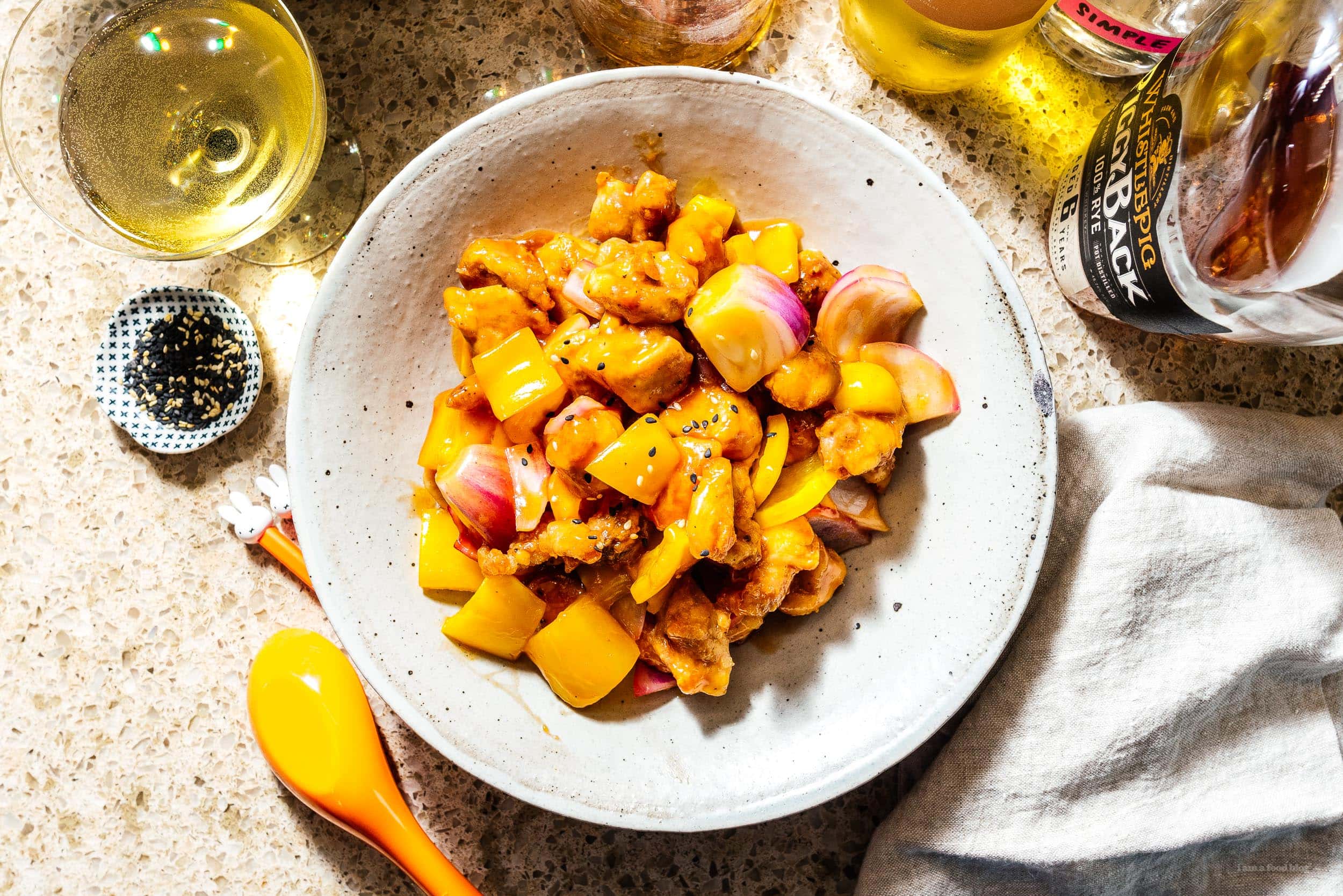
I Am... Sweet and Sour Chicken
This is an easy, healthy, 8 ingredient, no deep fry version of the classic takeout favorite sweet and sour chicken. If you grew up with traditional sweet and sour pork, it might surprise you that sweet and sour chicken is way more popular. Pork or chicken, this sweet and tart sauce is so good and so quick and easy to make. Forget takeout or delivery, this is better, faster, stronger.
Baked sweet and sour chicken
This is a variation on our authentic oven-baked sweet and sour pork, featuring chicken. The chicken ends up juicy with the slightest bit of crispiness thanks to a cornstarch coating. Besides no cleanup, no expensive oil to throw away, and no splatter, this is also way better for you, so you can feel good about eating it every night, and you're going to want to. It tastes just as good as the deep fried version with none of the guilt.How to make sweet and sour chicken
- Preheat your oven to 450ºF and season your chicken with salt and pepper.
- Coat the chicken. We use cornstarch, it makes for an authentically light and crispy coating. Any other starch such as potato starch is good too.
- Bake the chicken. 20 minutes, then flip and bake another 10.
- Make the sauce while you wait. Roughly chop up your onions and pineapple too.
- Sauce the chicken and lightly cook the onions and pineapples at the same time.
- Enjoy!
Sweet and sour sauce ingredients
- Ketchup?! I know you’re thinking, why? But the real reason is ketchup used and beloved in a lot of Chinese kitchens. We used ketchup as a extra flavor booster a lot when we were growing up and the truth is, a lot of restaurants use it too. It’s the secret to getting that unique tangy sweet and sour flavor in sweet and sour dishes.
- Pineapple or no pineapple? Usually there’s pineapple in sweet and sour dishes but we didn’t have any on hand and I didn’t want to go out and buy a can (or chunk). Feel free to add any vegetables in – any crunchy, juicy vegetable is always a good bet - such as the red onion and yellow peppers in the photos. Pineapple is classic though, and fresh is best!
Tips and tricks
- Don’t forget to lightly oil the wire rack you cook your chicken it, it helps it not stick and also somehow makes the chicken more crunchy on the bottom.
- If you want even more crunch, blast the heat up at the end of the baking session and get everything deeply browned – just make sure you keep an eye on it.
If you love Chinese food
Serve this up with some:- Fluffy White Rice
- Salted Egg Yolk Fried Chicken
- Classic Chinese Tomato Egg Stir Fry
- Chinese BBQ Pork aka Char Siu
- 15 Minute Spicy Shrimp and Snap Pea Stir Fry
- Easy Keto Friendly Low Carb Beef and Broccoli Stir Fry
- Rice Noodle Rolls Wrapped Around Chinese Doughnuts
- Spicy Chili Oil Wontons
Sweet and Sour Chicken Recipe
An easy, healthy, 8 ingredient, no deep fry version of that classic take out favorite: Chinese sweet and sour chicken
- 1 lb boneless skinless chicken thighs (cubed)
- 2 tbsp cornstarch
- 1/4 cup sugar
- 3 tbsp ketchup
- 2 tbsp white vinegar
- 1 tbsp soy sauce
- 1 bell pepper (cubed)
- 1/2 red onion (cubed)
Heat your oven to 450°F. Season the chicken with salt and pepper.
Place the chicken in a ziploc bag along with 1 tablespoon cornstarch. Shake well to coat and then place on an oiled rack on a foil lined baking sheet.
Bake for 20-30 minutes, until golden brown and crispy, flipping halfway.
When the chicken is almost done baking, make the sauce by whisk the remaining 1 tablespoon of cornstarch with 1/4 cup water. Whisk in the sugar, ketchup, vinegar, and soy sauce.
Add the sauce to a nonstick pan and bring to a boil. Once bubbling, turn the heat to low and add the vegetables. Cook until your desired doneness then remove from the heat (we keep the vegetables almost raw).
Add the cooked chicken to the sauce and toss until well coated. Enjoy served with rice!
Serves 2 as a main or 4 with other dishes.
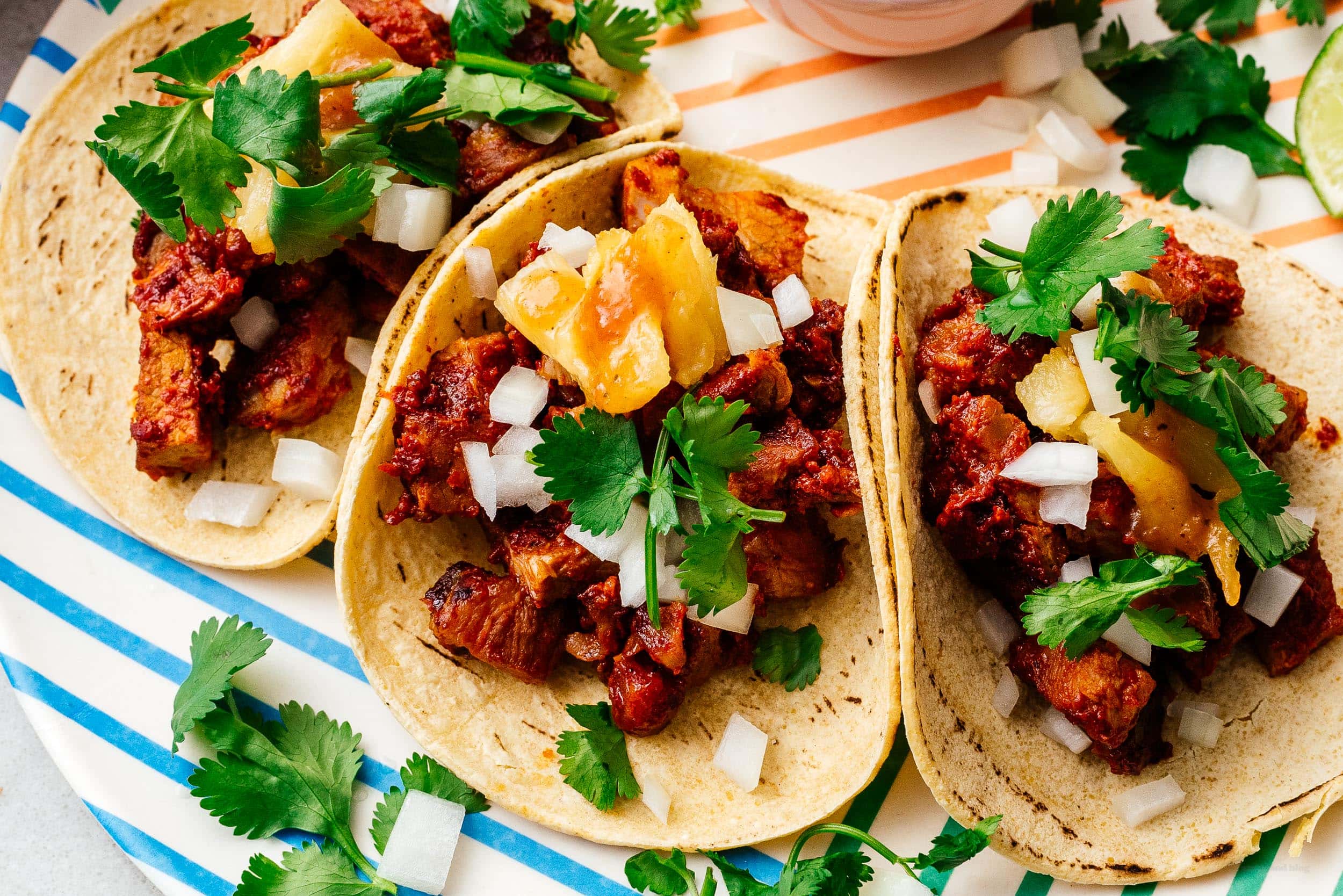
I Am... Easy 7 Ingredient Homemade Al Pastor
By far the best taco filling you can make at home, in only 7 ingredients. Your local Mexican place is always going to have the best tacos, but for those times you can’t (or don't want to) go out, this al pastor recipe is so good you’ll feel like you’re back wherever your taco heart belongs. It's so easy to make this smoky spicy and juicy pork you'll even use it for more than just tacos. Best of all, this recipe only requires 7 ingredients that you can get at any supermarket.
What is al pastor
Al pastor is a Mexican dish with pork that's been slow roasted on a vertical spit. Vertical spits are often associated with middle eastern food and this is no exception: legend says that Lebanese immigrants brought the cooking method to Mexico, where they paired it with traditional adobada to make the genius known as al pastor. It’s served in all kinds of dishes, in tortas/sandwiches, pizzas, and even on rice, but the most celebrated way to serve it is in tacos al pastor. The crisp smoky pork is sliced-to-order with a razor sharp knife as it's flame crisped by the vertical spit. The meat falls right into each taco and topped with a flourish of slow-roasted pineapple. It’s heaven in a tiny tortilla. Because you probably don't have a flame powered vertical spit at home, you can't replicate it 100% perfectly. But that doesn’t mean you can’t have an amazing, just-as-good version at home too, especially if you are far away from Mexico right now.The best homemade al pastor
Why this is the best homemade al pastor recipe: it’s smoky, sweet, and super easy. I’ve tried a lot of recipes on the internet and none of them really come close to what I love about al pastor - the smoky finish and the crisp edges. More importantly, a recipe that starts with "get your vertical spit" or "slice your pork with a commercial meat slicer" is a no go for me. This recipe has been in my back pocket for a long time now. It’s our go-to for taco nights, but I’ve never put it up until now because I always thought the ingredients were a little hard to come by. It’s worth it though, this recipe is simple, tasty, and comes really close to the real street-side deal.How to make al pastor
- Soak your chiles. Guajillos come dried and soaking them makes them pliable and easy to deseed.
- Slice and season your pork. I try to go for as thin of a slice as possible, so that there’s more surface area to absorb the marinade.
- Make the marinade. Blend the guajillos together with garlic, sugar, achiote, adobo, and pineapple juice until smooth.
- Marinate. Marinate your pork for at least 30 minutes, but better yet, overnight.
- Roast. You probably don’t have a vertical spit at home, so the best way to achieve that combination of soft supple insides and crispy, smoky edges is to lay out the pork in a single layer and broil at 500ºF until cooked. Don’t forget to roast your pineapples as well (on a separate baking sheet).
How to make tacos al pastor
- Prep your toppings. Dice your onions, chop your cilantro, slice your jalapenos, and portion out your salsas.
- Chop it up. Roughly chop your pork so that the majority of the pieces are about 1/2" x 1/2".
- Crisp up your al pastor. Frying it is optional but really intensifies the flavors, not to mention gets it nice and piping hot.
- Prep your tortillas. If you’re using flour tortillas, you should cook them now. If corn, cover 10-12 at a time with a damp paper towel and microwave for 30 seconds (or use a tortilla warmer like we do), then let sit another 30 seconds to steam before you build.
- Build and enjoy! Top with roast pineapples and all the other toppings you love.
Al pastor ingredients
Guajillo chilies
Guajillo are dried mirasol chiles that are sweet, smoky, and not very spicy. One of the most common chiles for Mexican food and one of our favorites. I’ve found the easiest way to buy the best quality chiles is online, where it’s far superior to anything outside of a good Mexican grocery store.Achiote paste
A blend of spices featuring annatto that goes great in everything. Not at all spicy, just deeply flavorful. My favorite brand is El Yucateco. From a staining perspective, annatto is just as bad as turmeric, so be careful not to get any on your clothes or white porous surfaces.Chipotle chilies in adobo
These are smoky spicy dried chipotle chiles (chipotle is smoked jalapeno) in adobo sauce - a sweet blend of tomatoes, vinegar, and spices. This recipe uses a whole can. Most people won’t find chipotle in adobo very spicy, but if you don’t prefer the spice level of jalapeno, it might be best to skip one or two of the pepper pods inside the can - the adobo part is a must however.Canned pineapple
Al pastor is traditionally served with roasted pineapple cut from the top of the vertical spit. This recipe needs pineapple juice anyway, so I prefer to use canned chunk pineapple and roast them, rather than deal with a whole pineapple. Most 398ml/13.5oz cans will yield exactly 1/2 cup of juice, which is what is called for in this recipe.Corn or flour tortillas
A lot of people prefer corn but if you live in the Southwest, you know (fresh) flour is awesome. When I’m not near really good flour tortillas, I try to buy locally made corn tortillas, but sometimes you're just in a food desert and don't have a lot of options other than national brands. In those cases, Mission is my go-to, both for corn and flour. Look for a street taco size.Spice level
This is not a spicy dish, but if you’re the kind of person where black pepper is just on the edge of spicy to you, then you might want to leave out a chipotle chile or two from the can. If you really, really hate spice, you’ll also want to deseed the guajillos. We use them for smoky flavor in this recipe, so you can remove all the seeds if you want to. The larger peppers are easier to deseed. Once softened, just turn them upside down and remove the stem, and 80-90% of them should fall right out.Grilling at the table
For taco nights, we like to do the last warming part at the table with a small tabletop griddle. You can warm your tortillas and the al pastor all at once, and it makes for a really fun night. Just prep all your toppings in little communal bowls, grab some drinks, and taco the night away.What to serve with tacos al pastor
- Other taco meats for an awesome taco night such as barbacoa, carnitas, adovada, and birria
- Tomatoey Mexican rice
- Homemade Salsa Verde
- Cilantro Lime Rice
Al Pastor Recipe
Smoky, sweet, and super easy crispy edged roast pork tacos topped with broiled pineapples.
- 8 dried guajillo peppers
- 2 lb pork shoulder/butt (cut into~ 1/4" slices, boneless)
- 8 cloves garlic (peeled)
- 7 oz chipotle peppers in adobo (1 can)
- 1 tbsp sugar
- 2 tbsp achiote paste (1.75oz/half package)
- 13.5 oz pineapple chunks (fruit and juice separated, 1 can)
- corn or flour tortillas (warmed, as needed)
Soak the guajillos in a small bowl filled with hot tap water for 15 mins. You can either remove the stems and seeds beforehand, or wait til the peppers are soft and pliable, hold them by the tip, upside down, over the sink, and cut the stems off. The seeds should fall right out.
Meanwhile, season the pork generously with salt.
Add guajillos, garlic, chipotle in adobo, sugar, achiote paste, and 1/2 cup pineapple juice to a blender and blend into a smooth marinade.
Marinate the pork for at least 30 mins and up to 24 hours in the fridge.
Preheat your oven to 500°F. Arrange the pork in a single layer on another baking sheet. Broil the pork until the edges and corners start to char, about 20 minutes.
While you wait for your pork to finish, arrange drained pineapple chunks in a single layer on a foil lined baking sheet. Remove the pork and broil pineapples until charred, another 15 minutes.
Slice meats, fry up, and make tacos.
Makes roughly 16 tacos (2oz per taco). Serves 8 when paired with other food, or 4 for taco nights. Estimated nutrition doesn't include tortillas, toppings, or sauces (if any).
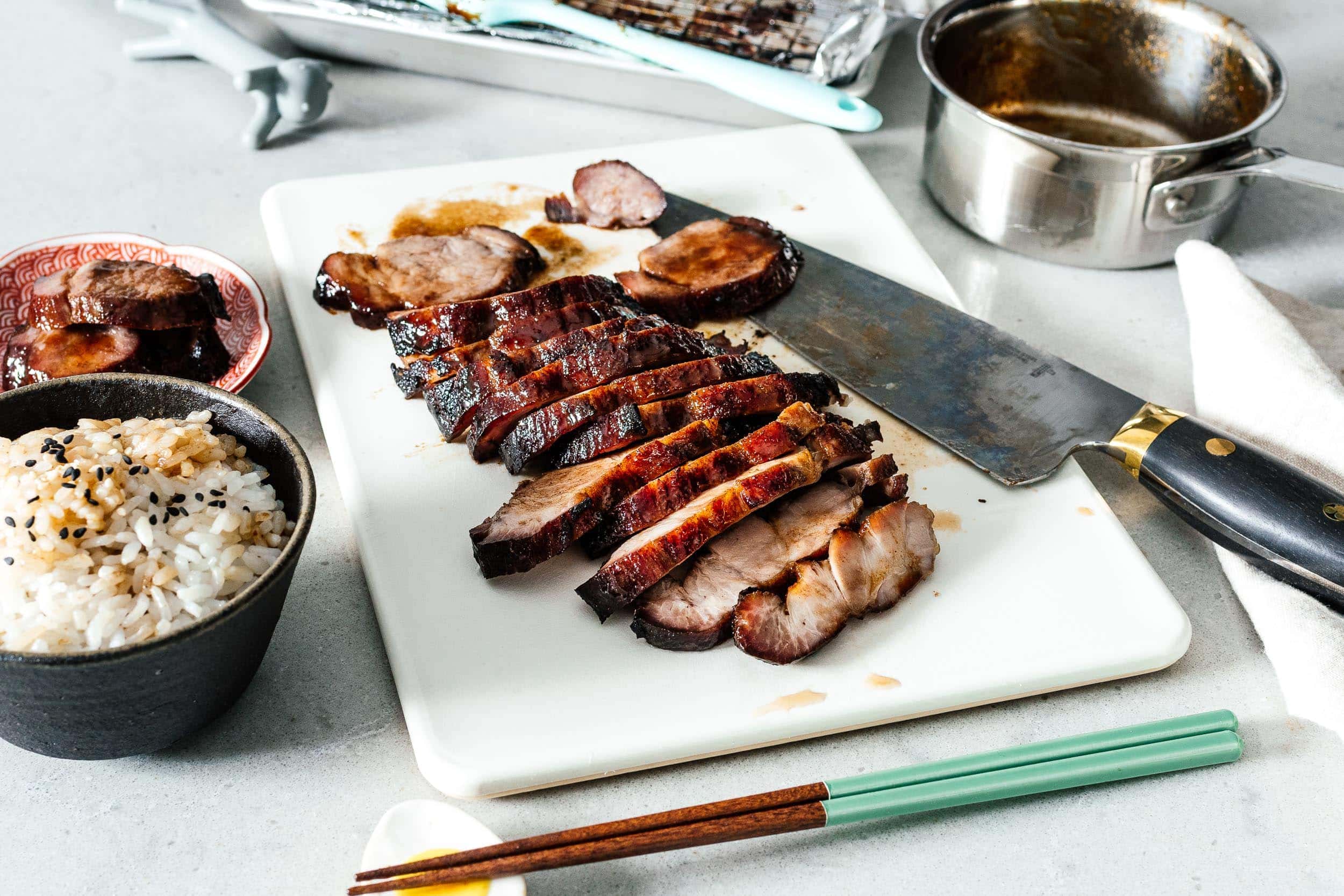
I Am... Easy Homemade Char Siu (Chinese BBQ Pork)
My ultimate comfort food is a bowl of fluffy rice, doused in sweet soy sauce with glistening glossy slices of Chinese bbq pork aka char siu. It's one of our go-to dinners for Mike and I because it’s just so darn easy. We usually just head to our favorite Chinese BBQ place and buy a pound of char siu along with some roast duck. Sometimes though, ok, actually quite often, we're living in a place without a great Chinese BBQ master, and then you need to take matters into your own hands. Luckily, unless you're trying to make a whole crispy roast pork or a brace of ducks, a home oven is all you need to make some great Chinese BBQ. This is a quick and easy char siu aka Chinese BBQ pork recipe. It’s essentially the same as this one here, minus the red fermented tofu because we don’t actually have any in the fridge. It lacks that hint of distinctive depth of flavor but it’s still really darn tasty!
What is Chinese BBQ pork?
Char siu literally translates to fork roasted and that’s exactly what char siu is, normally: fork roasted pork. Pork – usually pork butt/shoulder - is marinated in a sweet and savory BBQ sauce and then roasted. It’s sweet and salty and has just some nice complexity thanks to five spice. It’s juicy and sticky and just about perfect on a bowl of white rice.How to make char siu at home
- Cut your pork. You want to cut the pork into long strips at least 3 inches wide.
- Marinate. Mix up honey, hoisin, soy sauce, Shaoxing wine, garlic, ginger, five spice, and white pepper and rub it all over the pork and let it marinate overnight (or at least for an hour) in the fridge.
- Roast. Let the pork get all juicy and cooked through on a wire rack in a low oven.
- Make a glaze. Make a quick glaze by bringing the excess marinade and a bit of honey to a boil.
- Brush. Generously coat the pork with the glaze and give it a blast of heat to char it. Slice and enjoy!
What kind of pork for char siu?
You can use pretty much any piece of pork for char siu, from pork loin to pork butt. In fact, when you go to a real Chinese BBQ place, they often ask you, “fei ding sau” (胖或瘦) which translates to fat or skinny. Truthfully they usually only use pork butt at Chinese BBQ places, but even then, there will be leaner and fattier parts on a pork butt. If you want:- a more luscious, rich char siu - use pork butt
- tender, lower calorie, leaner char siu - use pork tenderloin
- a leaner, cheaper char siu - use pork loin
- the best char siu you’ve ever eaten - use pork collar aka pork neck. It’s not a common cut, but essentially it’s the shoulder that runs from the neck to the tip of the loin.
What ingredients do I need?
You do need a couple of Chinese sauces, namely hoisin and soy sauce. They sell hoisin online and at most grocery stores in the Asian aisle, so you’re pretty much good to go. Other than that you need honey, garlic, ginger, five spice, and a pork butt/shoulder.Char siu ingredients
- Hoisin sauce - They pretty much sell hoisin everywhere now, from Target to your basic grocery store. It’s a thick, sweet brown sauce that’s used in marinades and as a dipping sauce. Hoisin is super flavorful: sweet and savory, tangy, and full of umami. It’s essential for Chinese bbq dishes.
- Shaoxing wine - This is the secret ingredient that all your Chinese food needs to taste like restaurant style Chinese food. Shaoxing wine is rice wine and while it’s optional for this recipe, it’ll be 10 thousand times better if you get it. They sell it online and in Asian grocery stores.
- Five spice - So many char siu recipes out there are just glazed pork. But if you want a savory char siu, don’t forget the five spice. It’s added flavor.
- White pepper - If you don’t have white pepper, don’t sweat it, but if you do, use it here. It’s more fragrant, delicate, and floral. It adds pepperiness without overwhelming.
How do you pronounce char siu?
It’s cha as rhymes with "rah rah rah" and siu as in rhymes with “few.”Why should I make this?
Char siu is a low effort high reward SUPER delicious juicy roasted pork that you will love. It has a sticky sweet glaze that is so good that you’ll want to eat it on everything. Plus, if you’re missing Chinese take out, this is the dish for you.What can I serve it with?
You can have it with fluffy white rice, in buns, with noodles, in fried rice, basically anything. xoxo StephEasy Char Siu (Chinese BBQ Pork)
A delicious sweet and sticky juicy Chinese bbq pork aka char siu recipe
- 2 tbsp honey
- 2 tbsp hoisin
- 1 tbsp soy sauce
- 2 tsp Shaoxing wine (optional)
- 2 cloves garlic (lightly smashed)
- 1 inch ginger (sliced)
- 1/2 tsp five spice (optional)
- 1/4 tsp white pepper (optional)
- 2 tbsp honey (for glaze)
- 1 lb pork butt/shoulder (cut into strips)
Mix the marinade ingredients throughly. Coat the pork with the sauce and marinate for minimum 1 hour and up to 24.
When ready to cook, heat the oven to 300°F. Line a rimmed baking sheet with tinfoil. Remove the pork from the marinade, shaking off excess. Lay the pork on a wire rack on a rimmed baking sheet and bake for 1 hour, flipping halfway through.
While the pork is cooking, heat up the remaining marinade (remove the ginger and garlic) with the last 2 tablespoons of honey. Bring to a simmer over medium heat until it reduces and thickens slightly. It should coat the back of a spoon.
Brush the pork with the glaze and turn the heat up to 400°F, brushing with glaze and flipping, until slightly charred. Let rest slightly, slice and enjoy!

I Am... Green Goddess Salad
If you love chopped salads, you’re going to love this green goddess salad. This salad has been all over my Tiktok. Green goddess salad isn’t anything new, but this version does it with a twist and it’s pretty amazing. If you have any resolutions this year to eat healthier or go vegan-lite or full on vegan, this salad should be in your back pocket. I have this thing where I love eating salad with a spoon. Weird, I know, but chopped salads will forever and always be number one in my heart. So when I saw @bakedbymelissa dicing up cabbage and cucumbers and mixing them with sliced green onions, I was sold. She serves it up with a creamy vegan green dressing and scoops it up with tortilla chips, pure magic!
What is green goddess salad?
A green goddess salad is traditionally green cabbage, cucumbers, green onions, and chives cut into a very fine dice and dressed with green goddess dressing. That said, any salad that’s tossed with green goddess dressing is a green goddess salad. There are hundreds of takes and variations which is nice because it’s perfectly customizable.Green goddess salad dressing
Its pretty green tint is what inspired the name “green goddess.” Invented in San Francisco, the original recipe calls for anchovies, green onions, parsley, tarragon, mayo, sour cream, and chives all blended into a creamy tangy dressing. The green goddess salad dressing we’re making today doesn’t have much in common with the classic aside from the chives and green onions. There’s no anchovies, mayo, or sour cream, making it completely vegan. The dressing is a riff off vegan pesto and is herby, fresh, bright, and slightly tangy. It also has an addictive cheesiness to it because of the nutritional yeast.Green goddess salad ingredients
The salad itself is simply cabbage, cucumbers, green onions, and chives, all cut into a very fine dice, similar to a finely chopped coleslaw. The dressing is Melissa’s green goddess dressing, which is a take on a vegan pesto with walnuts and nutritional yeast instead of pine nuts and parmesan.How to make green goddess dressing
For the dressing you’ll need:- lemons - the juice of two lemons adds freshness and acidity
- olive oil - extra virgin olive oil for the good fats
- rice vinegar - a bit of extra tang and hint of sweetness
- shallot - a sweeter onion flavor
- garlic - because garlic
- basil - for that herby freshness found in pesto
- spinach - for a bit of extra green
- nutritional yeast - adds cheesy savoriness and B12 vitamins
- walnuts - a hint of a nutty base
- salt - to meld all the flavors and highlight the highs
Storage and make ahead
The salad keeps for 2-3 days in the fridge, either dressed or undressed. If you want to make it ahead of time just to have around, it's better to dress it beforehand. The acid in the dressing keeps it fresh and cabbage is very hearty, it'll taste great!What is nutritional yeast?
Nutritional yeast is cheesy, nutty, and full of flavor. Think of it like powdered cheese, but vegan and shelf stable. It’s a flaky, golden powder that’s made from a species of yeast grown specifically for food, then harvested. When harvested, heat deactivates the yeast, then it’s washed, dried, and crumbled. The result is a cheesy, nutty, savory ingredient that is used to make vegan cheese sauces, vegan dips, in soups, scrambles, stews, and more. Like its name implies, it’s super nutritious, full of protein, B vitamins, and antioxidants. This recipe works best with large flake nutritional yeast, which you should be able to find anywhere that carries bob's red mill, or online.Green Goddess FAQ
- Can I make this in advance? Yes! Cabbage is super hearty and you can make this in advance, it will keep in the fridge for 2-3 days, just make sure to give it a good stir before serving.
- I don’t like cabbage what can I use instead? If you don’t want your salad base to be cabbage, use shredded kale or chopped lettuce. Any somewhat hearty leafy green will work.
- How long will the dressing keep in the fridge? The dressing should last up to 3 days in the fridge, covered. Make sure to stir it before using.
- Does this salad taste good the day after? This is the kind of salad that tastes amazing the day after because the cabbage will soak up the dressing. It’s similar to how coleslaw tastes perfectly fine a couple of days after you make it.
- What other nuts can I use instead of walnuts? If you’re allergic to walnuts or just plain don’t like them, you can substitute in any other nut or just leave it out entirely. Some nuts to try: pecans, almonds, hazelnuts, macadamia nuts, cashews, pine nuts, pistachios, or even sunflower seeds.
- Can I use another kind of vinegar? Rice vinegar is super delicious, but if you only have another kind of vinegar at home you can feel free to substitute. Some good substitutes would be: white wine vinegar, or apple cider vinegar.
- How many servings does this make? Really it can be as many or as little servings as you like but for our nutritional info, this salad serves 4.
Variations
This particular salad is vegan but if you don’t have nutritional yeast at home and aren’t vegan you can substitute in parmesan for the nutritional yeast.- Add crispy bacon for protein and crunch
- Add diced chicken breast or crumbled firm tofu for lean protein
- Top it off with toasted sesame seeds for a nutty finish
- Spicy green goddess salad: add 2-3 diced jalapeños and 1 diced green pepper
- Guacamole green goddess salad: add 3 diced avocados and the juice of one lime
- Super green green goddess salad: swap the cabbage for 1 pound shredded brussels sprouts, add 1 pound chopped spinach, and 1 head shredded kale
- Taco goddess salad: swap the cabbage for lettuce and add 1 cup crumbled cojita cheese and 1/2 diced small onion
Tiktok Green Goddess Salad
A super satisfying green goddess salad inspired by tiktok.
- blender
Salad
- 1 small cabbage (finely diced, or iceberg lettuce)
- 3-4 small Persian cucumbers (finely diced)
- 1 bunch green onions (sliced)
- 1/4 cup chives (finely sliced)
Green Goddess Dressing
- juice of 2 lemons
- 1/4 cup olive oil
- 2 tbsp rice vinegar
- 2 cloves garlic
- 1 small shallot
- 1 cup fresh basil
- 1 cup spinach
- 1/3 cup nutritional yeast
- 1/4 cup walnuts
- 1 tsp salt
Finely dice or chop up all of the vegetables and toss in a large bowl.
In a blender or food processor, add the dressing ingredients, liquids first: lemon juice, olive oil, rice vinegar, shallot, basil leaves, spinach, nutritional yeast, walnuts, and salt. Blend until smooth.
Add the dressing to the bowl with the diced vegetables and mix well. Enjoy on its own, on tacos, as a side with protein, or scooped up with tortilla chips!
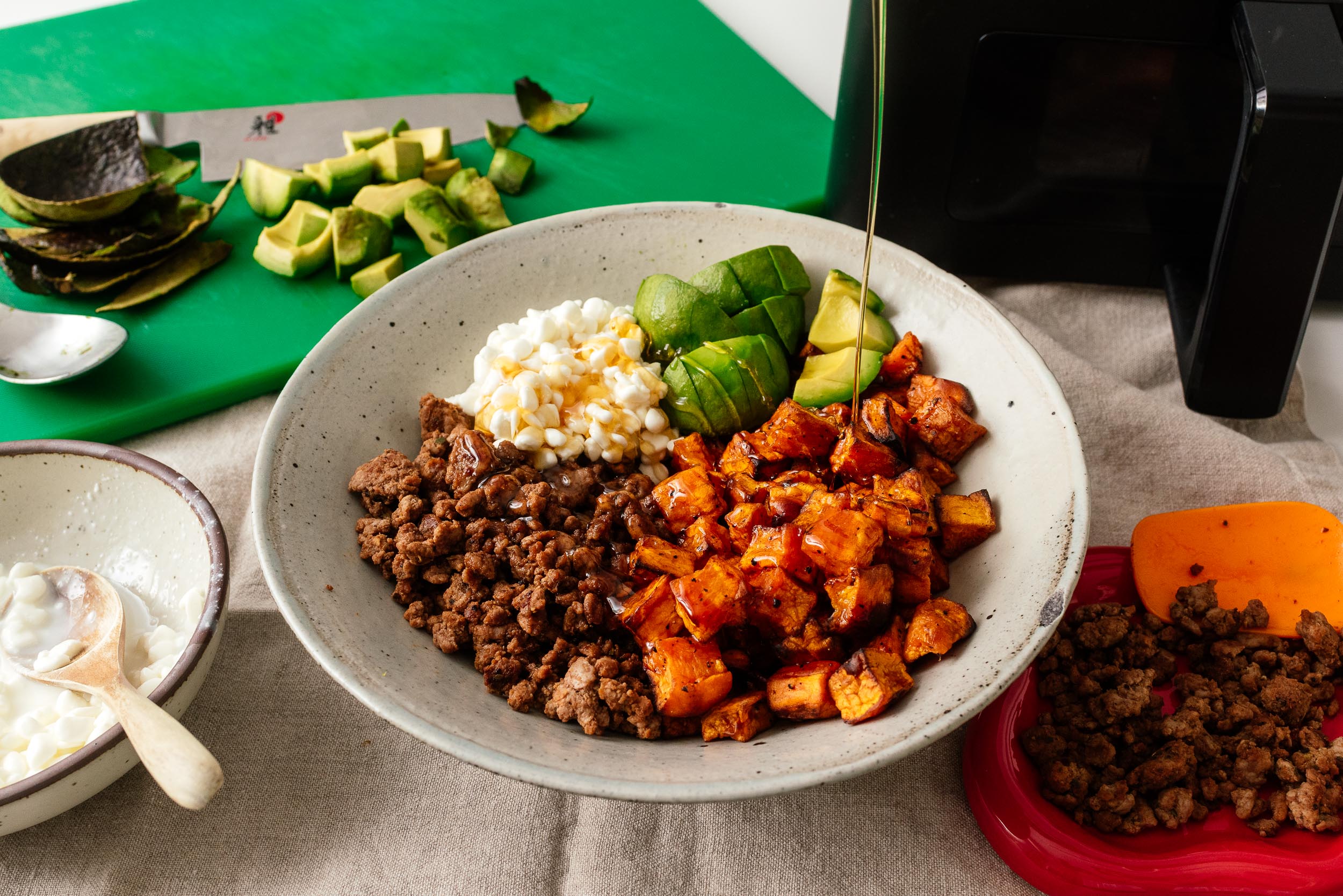
I Am... Tiktok Hot Honey Cottage Cheese Sweet Potato Beef Bowl
This viral hot honey cottage cheese sweet potato beef bowl from Tiktok is so good. If you’re looking for a balanced protein forward lunch or dinner, these sweet potato beef bowls are the answer. Seasoned ground beef, sweet potatoes, cottage cheese come together under a generous drizzle of hot honey. Viral bowls aren’t new but it usually takes something that really taps into the generous psyche for it to go viral. These bowls are all over TikTok because they’re photogenic, hearty, budget-friendly, quick, easy, and customizable.
What is the viral cottage cheese sweet potato beef bowl?
I first saw the viral hot honey beef bowl on TikTok. There are so many. I couldn’t figure out who made it first, but pretty much everyone who’s been making it is saying it’s the best high-protein meal they’ve tried in a long time. Essentially, it’s a bowl filled with roasted sweet potatoes, taco-seasoned ground beef, avocado, and cottage cheese, all drizzled with sweet and spicy hot honey. I’ve seen people adding herbs and leafy greens, but basically, the core bowl is sweet potatoes, beef, cottage cheese, avocado, and hot honey. People love them because of the balance of fats, fiber, and protein.How to make a hot honey sweet potato beef bowl
- Roast the sweet potatoes - peel and cube the sweet potatoes, toss them in a bit of neutral oil and season generously with salt and pepper. If you’re a cinnamon fan, give them a light dusting then roast the sweet potatoes until crisp and brown on the outside and creamy and sweet on the inside. I love using the air fryer for this, but an oven, toaster oven, or simply frying in a pan will work too.
- Cook the ground beef - cook the ground beef in a skillet, breaking it up in to a crumble. Season with taco seasoning and a touch of tomato paste. You can make your own homemade taco seasoning (see this easy recipe here) or just buy a packet from the store. Personally, I like making it at home because you can customize it and control the salt content.
- Prep the avocado - Cut a ripe avocado into cubes or slices.
- Build the bowl - Grab a bowl and lay down a bed of crispy sweet potatoes. Add some of the seasoned ground beef, a generous scoop of cottage cheese (give the cottage cheese a sprinkle of salt and a generous amount of freshly cracked black pepper), and the avocado. Drizzle generously with hot honey and dig in.
Cottage cheese sweet potato beef bowl ingredients
- sweet potatoes - crispy roasted sweet potatoes dusted with salt, pepper, and a touch of cinnamon. Adds fiber and fullness to your bowl.
- lean ground beef - lean ground beef is what’s going to make up the bulk of the protein. It’s seasoned with taco seasoning with a touch of tomato paste for richness and flavor. If you’re not into beef, you can definitely substitute in ground chicken, turkey, pork, or crumbled firm tofu.
- cottage cheese - I feel like the cottage cheese is the star of the show! It gives everything a creamy cheesy bite and ties everything together.
- avocado - the avocado adds a beautiful creamy bite, healthy fat, and yes, even more fiber.
- hot honey - a generous drizzle of hot honey makes this bowl just the right amount of sweet and spicy.
How to make hot honey
You can buy hot honey from the grocery store, online, or make your own at home. All you need is honey, crushed red pepper flakes, and apple cider vinegar.Hot honey recipe
- Add 1 cup of honey to a small sauce pan, along with 1 tbsp crushed red pepper flakes and 1 tsp apple cider vinegar.
- Gently heat the hot honey mix for 2-3 minutes while stirring until it bubbles gently and you start smelling the pepper flakes heating up.
- Once the honey bubbles and reduces a bit, remove from the heat and let infuse for 5-10 minutes.
- Strain out the pepper flakes once the honey is infused to your liking. Let the hot honey cool and use as desired. Store leftovers in an air tight container at room temperature.
Cottage cheese
For the uninitiated, cottage cheese is a soft, and mild fresh cheese that comes in different curd sizes. Personally, I love Good Culture cottage cheese, which has small, soft curds that are incredibly creamy and flavorful. I love it so much that I eat it plain as a snack. It’s perfect in this bowl. I feel like people are sleeping on cottage cheese. It’s one of my favorites - creamy, and full of protein and nutrients. It’s a great choice for people looking to get a lot of protein in their diets. I feel like if you’ve tried cottage cheese and don’t like it, it just means that you haven’t tried the right cottage cheese. That’s it! I loved these bowls and Mike did too. They’re just a simple, throw it together kind of meal that will keep you full and fuel you for any sort of adventure you might be going on (for us, that’s spring skiing). Happy protein bowling! xoxo StephSweet Potato Beef Bowl with Hot Honey and Cottage Cheese
If you’re looking for a balanced protein-forward lunch or dinner, this sweet potato beef bowl is the answer.
- 2 medium sweet potatoes (peeled and cubed)
- 2 tbsp neutral oil
- 1/2 tsp cinnamon (optional)
- 1 lb ground beef (lean preferred)
- 2 tbsp taco seasoning
- 1 tbsp tomato paste
- 2 cups cottage cheese
- 2 avocados (cubed or sliced)
- 4 tbsp hot honey (or to taste)
Toss the sweet potato cubes in the oil and season generously with salt and pepper. Sprinkle with the cinnamon, if using. Air fry, in a single layer, at 400°F for 10-15 minutes, or until golden and cooked through, shaking halfway.
While the sweet potatoes are cooking, cook the ground beef in a large skillet over medium high heat. Break up the ground beef and stir in the tomato paste. Sprinkle on the taco seasoning. Continue to cook, stirring occasionally, until browned and cooked through. Set aside.
When the sweet potatoes are crisp and cooked through, assemble the bowls: divide the sweet potatoes and ground beef evenly between four bowls. Top each bowl with cottage cheese and avocados. Drizzle generously with hot honey and enjoy!
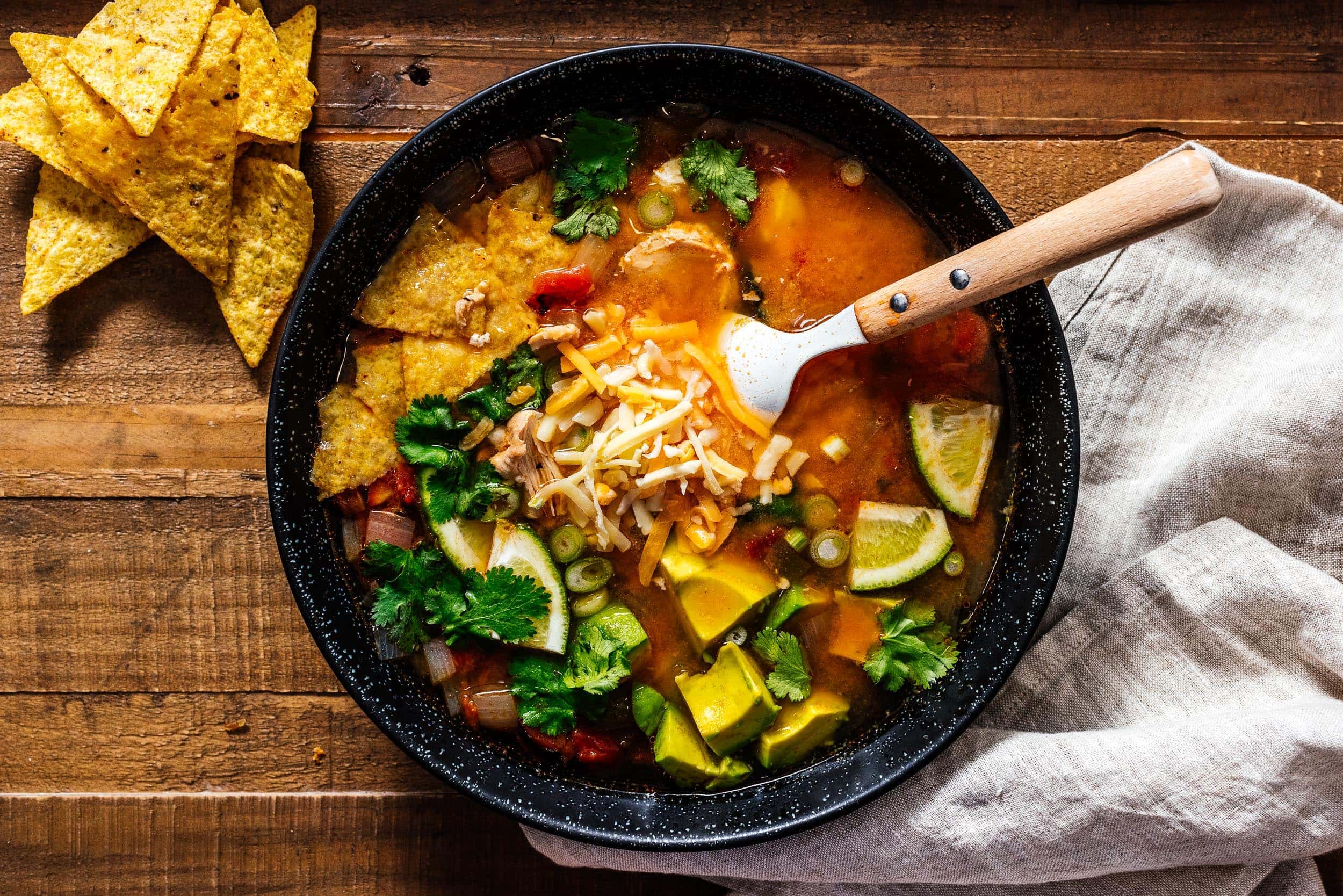
I Am... Classic Chicken Tortilla Soup
I am obsessed with chicken tortilla soup. I love that warm and savory broth-y soup topped off with crunchy bits of deep-fried tortilla strips, cheese, sour cream, and avocado. Tortilla soup is serious comfort food. I went through a phase a couple years back when all I would eat everyday for lunch was chicken tortilla soup. A tiny little Mexican place had just opened up in the neighborhood and Mike and I tried it and loved it. Soon, I started begging to go for lunch everyday. I said it was because I wanted to support local and see our neighborhood Mexican restaurant succeed but really it was because I was obsessed with their lunch special: chicken tortilla soup with a mini burrito. I loved the burrito but the real star was the soup. Deep red with hints of toasty toasty chiles with ALL the toppings. We moved a couple years after my obsession and before leaving, I asked if I could get their recipe. They very kindly gave me a general outline since we were regulars - ever since then I’ve been making this soup at home.
What is tortilla soup?
Tortilla soup or sopa de tortilla is a Mexican soup made from tomatoes, garlic, onions, and chiles. It’s topped off with fried corn tortilla strips. It’s broth-y, warming, and delicious. It can be made with beef or pork but the best and most traditional version is chicken tortilla soup.How to make chicken tortilla soup
Making tortilla soup is amazingly simple for how delicious it is. They key is to add in a dried chile for some smoky warm heat.- Sauté: Gently sauté some aromatics like onions and garlic.
- Add: To the aromatics, add in chicken broth, fire roasted tomatoes, a dried ancho chile, a chopped jalapeño, and some chicken.
- Simmer: Let everything simmer so the flavors meld.
- Shred: Take the chicken out and chop or shred it.
- Serve: Scoop some soup into a bowl then top it off with crispy tortilla strips (or chips), shredded cheese, avocado, jalapeño, and sour cream. Enjoy living your best soup life!
Chicken tortilla soup ingredients
You can easily find all the ingredients for this chicken tortilla soup at the grocery store. Heck, it’s almost a pantry soup, if you have some staples on had. You’ll need: onion, garlic, chicken broth, fire roasted tomatoes, chicken, tortillas strips (or chips), and some toppings.- Dried ancho chile - ancho chile peppers are the dried version of poblanos, a slightly spicy Mexican pepper. When dried, ancho peppers are dark red with glossy wrinkly skin. They have a sweet smoky fruity flavor with a warm mild heat. You can find them in the Mexican aisle. They’re used whole to flavor soups and stews and when they’re ground up you get ancho chile powder.
- Fire roasted tomatoes - You can find these canned in the tomtato aisle. Fire roasted tomatoes are roasted over an open fire – they even come with blackened bits – then diced and canned. They add smoky sweet juicy tomato packed flavor to tortilla soup.
- Tortilla strips - The best thing to do is grab some corn tortillas, cut them into strips, and gently fry them in oil until they are incredibly fragrant, crispy, crunchy, and absolutely accidtive. Here’s how to fry tortilla chips [https://iamafoodblog.com/you-need-homemade-tortilla-chips-in-your-life/](https://iamafoodblog.com/you-need-homemade-tortilla-chips-in-your-life/) , instead of triangles, cut them into strips for this recipe. Frying your own tortilla strips is the best option, but if you have a bag of tortilla chips hanging out, you can use those too, which is what I did in these photos.
How to make this the BEST soup
Because tortilla soup doesn’t have a huge long list of ingredients (thank goodness!) it’s important that each ingredient is its absolute best. For me, tortilla soup is all about the add ins and toppings. Here are some tips on how to make the best tortilla soup:- Fry your own crunchy tortilla strips. I know, I know, the photos in this post have store bough tortilla chips (a travesty!) but be better than me and fry your own tortilla strips. It’s easy: slice a couple of corn tortillas into strips. Heat up a bit of oil over medium high heat. Add the tortilla strips and cook until golden brown and crispy. Remove from the oil, drain and sprinkle with salt. They’ll be incredible, trust me.
- Have a little topping bar. Scoop out the soup into bowls, then create a little topping bar with chopped cilantro, green onions, shredded cheese, avocados, lime, jalapeños, sour cream, and tortilla strips. This way everyone can add in as much or as little garnish as they like. If you’re like me, it’s all about the toppings!
- Finish with a bit of chili powder. Sprinkle on a tiny bit of chili powder – even better if it’s homemade – for an extra hit of flavor.
Stovetop Chicken Tortilla Soup
Lightly sauté the onion, garlic, and jalapeño in a bit of oil then add the chicken broth, tomatoes, and chicken to a pot and bring to a simmer over medium heat. Continue to simmer until the chicken is cooked through. Remove the chicken, shred, add back into the soup, season and serve with the toppings.Crock Pot Chicken Tortilla Soup
Add all of the ingredients to crock pot and cook on low for 5-6 hours. When done, remove the chicken, shred, add back into the soup, season, and serve with the toppings.Instant Pot Chicken Tortilla Soup
Add all of the ingredients to the Instant Pot and cook on high pressure for 5 minutes. Quick release, remove the chicken, shred, add back into the soup, season, and serve with the toppings.Creamy chicken tortilla soup
This chicken tortilla soup isn’t creamy, but it’s super easy to add some heft, creaminess, and tang. All you need to do is stir in 1/2 cup softened cream cheese at the end, right before you serve it up. Make sure the cream cheese is at room temp so it blends and melts into the soup evenly.Sides
I love tortilla soup as a meal, but if you want to round it out a bit, maybe add some:- mexican rice
- chicken tinga tacos
- birria tacos
- or even barbacoa tacos
- and of course homemade tortilla chips
- and guacamole too
Chicken Tortilla Soup Recipe
Warm and savory broth-y soup topped off with crunchy bits of deep-fried tortilla strips, cheese, sour cream, and avocado.
- instant pot
- 1 medium onion (diced)
- 3 cloves garlic (minced)
- 1 dried ancho chile
- 1 jalapeño (chopped)
- 4 cups chicken stock (no sodium preferred)
- 14.5 oz fire roasted tomatoes (1 can)
- 1 chicken breast (or 4 boneless skinless chicken thighs)
- salt and freshly ground pepper
Toppings
- 1 jalapeño (sliced)
- 1/2 cup fresh cilantro (roughly chopped)
- 1 avocado (cubed)
- 1/2 cup cheddar (shredded)
- 1/2 cup sour cream
- 1 cup tortilla chips (crushed)
- 2 lime wedges
Stovetop: Lightly sauté the onion, garlic, and jalapeño in a bit of oil then add the chicken broth, tomatoes, and chicken to a pot and bring to a simmer over medium heat. Continue to simmer until the chicken is cooked through, about about 10-15 minutes, depending on the size of the chicken.
Crock pot: Add all of the ingredients to crock pot and cook on low for 5-6 hours.
Instant Pot: Add all of the ingredients to the Instant Pot and cook on high pressure for 5 minutes. Quick release, remove the chicken, shred, add back into the soup, season, and serve with the toppings.
Just before the soup finishes cooking, prepare the toppings: slice the jalapeños, chop up the cilantro, slice the avocado, and cut the limes.
When the soup is done, remove the ancho chile and discard. Carefully remove the chicken, shred, then divide into bowls. Taste the soup and adjust the seasoning with salt and pepper, then ladle on top of the chicken. Finish with jalapeños, cilantro, avocado, cheddar, sour cream, tortilla strips, and lime. Enjoy hot!

I Am... Strawberry Oatmeal Muffins
These oatmeal strawberry muffins are the perfect combination of healthy and sweet treat. A hearty, healthy(ish) oatmeal muffin studded with sweet strawberries. Spring is in the air. The cherry blossoms are starting to bloom and the sunshine is starting to give me serious serotonin. Whenever the weather turns warm, I think about long walks, picnics, and chill vibes hikes. And when I think about hikes, I think about hiking snacks, like these muffins! They’re topped with a sprinkle of crunchy sanding sugar and have a hefty amount of protein rich, keep-you-full, rolled oats. I love the combination of juicy, jammy strawberries with the nuttiness of oats.
Strawberry oatmeal muffins are the best
Muffins are my favorite because they’re kind of like granola bars, but better. They’re portable, they fill you up, and they taste good too. What more could you want? This recipe is a riff off of my favorite blueberry muffin recipe but with strawberries instead of blueberries and the added whole grain nuttiness of rolled oats. It’s the perfect springtime muffin - reminding me of warmer days ahead filled with summer strawberries.How to make oatmeal muffins
- Soak. Soak the oats in a bit of milk to soften and thicken.
- Cream. Cream butter and sugar together until fluffy, then stir in an egg, vanilla, and the oat-milk mixture.
- Stir. Add flour, baking powder, and salt to the creamed mix, stirring until just combined.
- Mix. Mix in the strawberries and spoon out the batter into a muffin tin. Top with a sprinkle of rolled oats.
- Bake. Bake, let cool, and enjoy!
Oatmeal muffin ingredients
These oatmeal muffins have all your classic ingredients: butter, milk, sugar, eggs, vanilla, flour, baking powder and salt. Essentially the only thing we’re doing a bit differently is adding oats. Old fashioned rolled oats, sometimes just called rolled oats, are what we’re going to use in these muffins. We’re going to soak them in milk to activate their thickening power and give them a chance to rehydrate before adding to the muffin batter so the oats bake up lighter and fluffier.Oatmeal muffin variations
You can customize these muffins with any fruit you like! Substitute raspberries, blueberries, blackberries, cherries, even shredded carrots or zucchini. To add some chocolate goodness, stir in 1/2-3/4 cup chopped chocolate or chocolate chips when you add the fruit.If you love muffins, here are a couple of other muffin recipes to try:
- The best blueberry muffin recipe
- Crisp and chewy coconut mochi muffins
- Banana chocolate chip muffins
Strawberry Oatmeal Muffins
These oatmeal strawberry muffins are the perfect combination of healthy and sweet treat.
- muffin tins
- 1/2 cup milk (of choice)
- 1/2 cup rolled oats (plus extra to sprinkle)
- 1 cup strawberries (roughly chopped or sliced)
- 1/4 cup butter (at room temp)
- 10 tbsp sugar (1/2 cup + 2 tablespoons)
- 1 large egg
- 1/2 tsp vanilla extract
- 3/4 cup all purpose flour
- 1 tsp baking powder
- 1/4 tsp kosher salt
- 1 tsp coarse sanding sugar (or more, for tops)
Preheat the oven to 375°F. Combine the milk and oats together in a small bowl or liquid measuring cup and let soak. In another bowl, optionally toss the strawberries with 1 teaspoon sugar. Set aside.
Cream the butter and sugar until light. Add the egg, beating well. Stir in the vanilla and the soaked oats.
In a bowl, sift together the flour, baking powder, and salt. Gently stir the flour mix to the creamed oats mix.
Drain the strawberries then fold in gently.
Line a standard muffin tin with 6 liners, and fill equally with the batter. Sprinkle the sanding sugar and a couple of oats over the tops of the muffins, and bake at for 30-35 minutes, or until the tops are golden and toothpick comes out clean.
Let cool for 10-15 minutes before removing muffins from tins and enjoy!
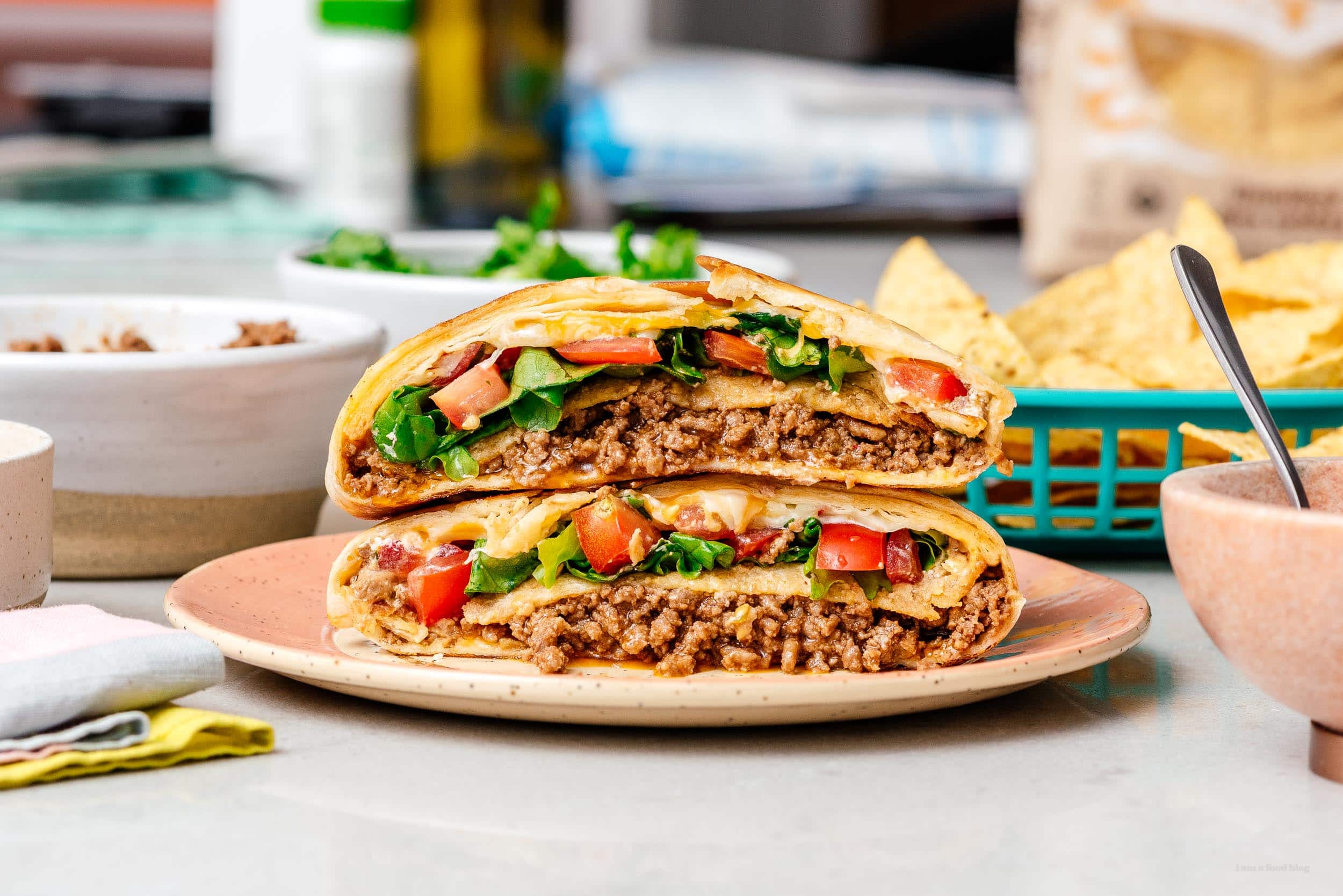
I Am... Why buy Crunchwraps when you have Crunchwrap at home?
A do-it-yourself homemade crunchwrap supreme is the ultimate cheat day eat. Imagine an extra large flour tortilla topped with seasoned ground beef, melty nacho cheese, a crispy tostada shell, freshly shredded lettuce, ripe tomatoes, and cool sour cream, folded up and grilled. It’s a Taco Bell classic and it’s one of my favorite things to make and eat. I love Taco Bell. But if I’m being honest, I also love making things at home because, I dunno, it gives my life some sort of semblance of being grown up? Somehow, making dinner from scratch just feels good. It's certainly got to be healthier!
What is a crunchwrap supreme
It’s the best combination ever of crunchy and soft, savory and fresh. It’s basically a flattened burrito with a crispy crunchy tostada core. There’s seasoned beef, nacho cheese, a giant crunchy corn chip, lettuce, tomatoes, and sour cream all tucked into a flour tortilla that’s grilled. It’s SO GOOD. It’s definitely one of my guilty pleasures. Making it at home makes it not-so-guilty because, everything’s healthier when you make it at home, right? Even if you eat three of them?!A crunchy secret
The secret ingredient in a crunchwrap is the crunch. Crunchy things make you want to keep taking bite after bite and the crunch inside a crunchwrap is no exception. The crunch in a crunchwrap is a tostada, similar to a giant round tortilla chip.How to make a crunchwrap supreme
- Prep. Get all your ingredients ready. You’ll need to cook up some taco seasoned beef, make or buy nacho cheese (I bought mine), shred some lettuce, and chop some tomatoes.
- Layer. Lay a giant flour tortilla on a flat surface. Place a scoop of seasoned beef into the middle and spoon on some warm nacho cheese. Place a tostada on top and layer on sour cream, then shredded lettuce, tomatoes, and shredded cheese.
- Fold. Fold the sides of the flour tortilla up and over the filling, making a hexagon.
- Grill. Place the crunchwrap on a non-stick pan and grill until toasted, flipping once.
- Enjoy. That’s it! Enjoy your homemade crunchwrap!
How to fold a crunchwrap supreme
The end shape of a crunchwrap is a hexagon, with six sides. Take an edge of the tortilla and fold it down on to the fillings. Use one hand to hold it down in place and use your other hand to lift and fold another edge of the tortilla over the filling. Continue folding and holding until you make 6 folds, then flip the crunchwrap, seam side down onto a non-stick frying pan and lightly grill over medium heat.Ingredients
- Extra large flour tortilla. The larger your tortilla, the easier it will be to fold your crunchwrap. Go for the XL burrito size tortillas, at least 12 inches.
- Seasoned ground beef. You can use a handy seasoning packet – they even sell Taco Bell branded ones, but I’ve included a recipe that you can easily make at home with pantry spices.
- Nacho cheese. The gooey nacho cheese is a signature in a crunchwrap. If you don’t have have nacho cheese and don’t want to make it, you can used shredded. They sell nacho cheese at the store but if you want to go all out and make queso, here’s a recipe. Pro tip: keep some extra around for dipping.
- Tostada. They sell tostadas right next to the tortillas. They look like crispy fried corn tortillas because that’s what they are. You can also fry up small corn tortillas if you don’t want to buy tostadas.
- Sour cream. Sour cream is pretty self explanatory. You can also sub greek yogurt if you’re looking to be a bit healthier.
- Lettuce. I like green leaf lettuce but any shredded lettuce will do.
- Tomatoes. diced tomatoes add sweetness and juiciness.
- Shredded cheese. the shredded cheese is a bit over the top considering there’s nacho cheese, which is why Taco Bell doesn’t actually have a shredded cheese layer. But more cheese = more better!
What is a tostada?
A tostada is a small corn tortilla that’s been fried, baked, or grilled so it has a crispy crunchy texture like a tortilla chip.How to make tostadas at home
Add a bit of oil to a frying pan and heat it up over medium heat. Add a corn tortilla and fry it, until it sizzles and turns golden brown, flipping as needed. Let it cool and drain. It will become crisp and crunchy after it cools down.FAQ
What size tortillas do I need for crunchwrap supremes?
The bigger the better! An extra large tortilla, at least 12 inches in size will make it easier for you to fold up and over the fillings.What if I can’t find extra large tortillas?
If you can’t find giant flour tortillas, grab the biggest ones you can find. Get a second pack of the smallest flour tortillas. Assemble your crunch wrap and in the middle, on top of the fillings, place a small flour tortilla on top and fold the original tortilla over the fillings covered with the tortilla.What can I put inside a crunchwrap?
Absolutely anything. If you’re a fan of chicken, pork, or turkey, you can use those instead of ground beef. You can even make crunchwraps with carnitas, barbacoa, chicken tinga, al pastor, the list goes on. If you’re vegetarian you can use beans, refried beans, or tofu.Other crunchy things to add to a crunchwrap
- doritos
- flaming hot cheetos
- takis
The crunchwrap hack
Try the tiktok wrap hack if you want a slightly different (and easier) way to fold your crunchwrap. Both are good! Happy Crunching!Crunchwrap Supreme
The ultimate cheat day eat
Taco Seasoning
- 2 tsp chili powder
- 2 tsp ground cumin
- 2 tsp onion powder
- 2 tsp garlic powder
- 1 tsp paprika
- 1/4 tsp cayenne (optional)
Crunchwrap
- 1 lb ground beef (lean preferred)
- 1/2 cup tomato sauce
- 1/2 cup nacho cheese (warmed)
- 6 flour tortillas (extra large/12"/burrito sized preferred, see notes)
- 6 tostadas (or street sized corn tortillas fried until crispy)
- 1/2 cup sour cream
- 2 cup lettuce (shredded)
- 1 cup tomato (diced, about 1 large hot house )
- 1 cup cheese (shredded, Tex Mex blend preferred)
Brown the beef in a frying pan over medium high heat, breaking up, until browned and cooked through. Add the spices, tomato sauce, and 1/4 cup water. Simmer until slightly reduced but still saucy. Taste and season with salt and pepper. Set aside.
Lay out a large flour tortilla and place a scoop of the taco beef into the middle, about the size of the tostada. Scoop a generous amount of warmed nacho cheese over the beef.
Place the tostada shell on top of the beef. Spread some sour cream on top of the tostada.
Top with shredded lettuce, diced tomatoes, and shredded cheese.
Tightly fold the edges of the tortilla up and over the filling. Repeat 5 times so you have six folds and the crunchwrap is a hexagon.
Heat up 1 tsp of oil in a non-stick pan over medium heat. Add the crunchwrap, seam side down and grill until golden brown. Flip and brown the second side. Remove from the pan, slice in half and enjoy!
If you’re not using extra large tortillas, place a extra tortilla in the middle on top of the filling before folding.
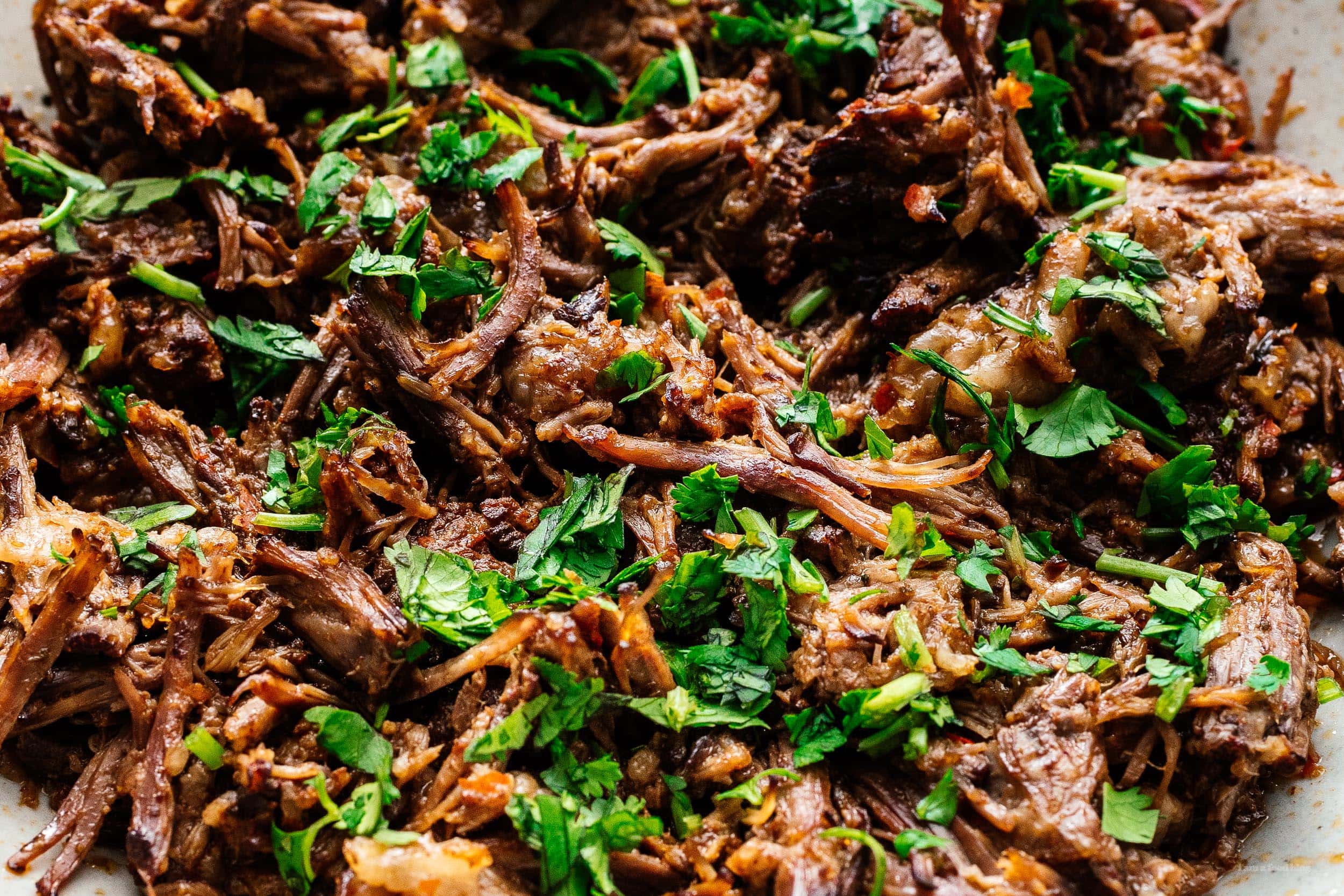
I Am... Make this Barbacoa Recipe (seriously, it’s good)
Barbacoa is beef that's slow cooked til juicy, soft and tender, then coated in a savory red chile sauce that has just a tiny hint of spice and a huge hit of flavor. If you like carnitas, al pastor, adovada, carne asada, or birria tacos, you're going to love barbacoa. It's one of the easiest taco fillings to make at home and tastes so, so good.
What is barbacoa?
Barbacoa originated in the Caribbean as an in-ground slow cooked whole animal wrapped in leaves, but these days it's most closely associated with Mexican food. Barbacoa is said to be the original word for barbeque, and it's basically the same thing: slow cooked meat imbued with a lot of flavor. Mexican barbacoa as we know it today is a juicy and flavorful soft shredded beef/lamb/goat seasoned with dried chiles and spices and cooked until it falls apart. It's sweet, tangy, and just a little spicy. You can serve it in tacos, burritos, enchiladas, quesadillas, flautas, and much more. This version is an easy and simplified barbacoa de res, which translates to barbacoa beef, although you could adapt this recipe to lamb or goat if you want.How to make barbacoa
- Soak the peppers. Soak the peppers in super hot water to rehydrate them. If you want to be extra, you can toast them over a low flame to coax out some extra flavor before soaking.
- Season the meat. While the peppers are soaking, season your meat generously with salt and freshly ground pepper.
- Make the marinade. Grab your blender and blend together the peppers, garlic, oregano, cumin, beef stock, and vinegar.
- Marinate overnight. Marinate as long as you can, or for at least 2 hours so the beef can absorb the flavors. Don’t forget to season your beef with salt and pepper first.
- Make the stew. Caramelize the onions to add a little sweetness, add the beef (you can sear it if you want, but we’re aiming for soft and tender meat) along with all the marinade, then top it off with extra beef stock, bay leaves, and cloves.
Barbacoa ingredients
Barbacoa is made of beef, dried chile, garlic, onions, spices, vinegar, and beef broth. It’s amazing how such simple ingredients combine together to create a deeply flavorful, out of this world taste.- Dried guajillo chiles. These sun dried peppers add an authentic touch of mexican flavor to any stew and you can usually find them in the Mexican aisle of your local grocery store. They are like a mild-medium pepper and don’t add any heat. If you can’t find guajillo, sub any dried mexican/southwestern peppers, such as ancho, new mexico, california, or pasilla. If you really can’t find them, you can sub a can of chipotle peppers in adobo.
- Mexican oregano. Mexican oregano is different than Mediterranean oregano; it's actually a different plant. Mexican oregano is indigenous to Mexico and has a more woodsy, citrus-lime earthy flavor compared to Mediterranean oregano. You can find it in the Mexican aisle at the grocery store.
- Cumin. Cumin gives the barbacoa a nutty, earthy, spicy, almost lemon-y aroma.
- Vinegar. Vinegar tenderizes the beef and balances out the richness of the meat. You can use whatever vinegar you have on hand.
Barbacoa tacos
In my opinion, barbacoa is the best homemade taco filling other than birria. Once you have your barbacoa made, it's easy:- Shred the meat. When the beef is done cooking, take the beef out of the consomé and use a couple of forks to shred it up. It’ll be so tender that it’ll basically fall apart instantly. Spoon some extra consomé back on so it’s extra juicy.
- Warm the tortillas. You need warm tortillas for the best taco experience. Soft and pliable tacos are where it’s at. We like using a tortilla warmer but you can just wrap your tortillas up in slightly damp paper towels and pop them in the microwave for 30 seconds. You can also char them on the stove for some crispy edges or lightly frying them on a nonstick skillet.
- Fill the tacos. Be generous and top up your tacos with beef and a little drizzle of the consomé that the beef cooked in.
- Top it up. Finish off your tacos with some toppings. Classic is chopped cilantro and onions, but you can go with anything you like. We added some pickled onions and sliced jalapeños. Don’t forget the hot sauce!
Beef barbacoa
For barbacoa de res, the meat is traditionally beef brisket, but you can choose any kind you like. Because it's a stew, you want a cheaper cut that has some connective tissue and a little fat. The best cuts of beef that are ideal for stewing are: chuck, brisket, shank, cheek, and short ribs. The recipe specifies just one cut, but I usually do a combination of two or more, usually chuck and short ribs for some richness.Instant Pot Barbacoa
This recipe is best made in the Instant Pot because it's easy, fast, and it locks in flavor. It's truly a one pot, set and forget kind of affair.Slow cooker barbacoa
If you don't have an Instant Pot, you can make this in a crockpot or other slow cooker. Saute the onions first on high heat, then add the rest of the ingredients and set to low heat for 4-6 hours, until the beef is tender and shreddable.Stovetop barbacoa
Saute the onions over med-high in a deep stockpot, then add the rest of the ingredients. Cover slightly ajar and turn down to a bare simmer for 4-6 hours, until the beef is tender and shreddable. Keep an eye on the liquid level by checking back every hour or so, adding more beef broth as necessary.Oven-braised barbacoa
This is the same as stovetop with the bonus advantage that you don't need to worry about it ever burning. Saute the onions over med-high in an oven proof pot such as a dutch oven, then add the rest of the ingredients. Cover and place in a 300ºF 4-6 hours, until the beef is tender and shreddable.What to serve with barbacoa
- Have a taco party with some other taco fillings like carnitas, al pastor, adovada, carne asada, or birria
- Since you'll have tortillas on hand, nothing beats homemade fresh fried tortilla chips
- Finish off with some mexican rice
- And of course, pairing anything guacamole is always the answer.
Barbacoa Recipe
Tacos filled with juicy, soft and tender beef coated in a savory red chile sauce that has just a tiny hint of spice and a huge hit of flavor.
- blender
- 2 lbs beef (cheek, brisket, short ribs, shank, chuck roast, or mix)
- salt and freshly ground pepper
Marinade
- 3 dried guajillo peppers
- 6 cloves garlic
- 2 tsp dried oregano (Mexican preferred)
- 2 tsp cumin
- 1/4 cup beef stock (low sodium preferred)
- 1/4 cup vinegar
Consomé
- 1 medium onion (diced)
- 3 bay leaves
- 6 whole cloves
- 1 cup beef stock (low sodium preferred)
To serve
- 12-16 4" corn or flour tortillas (or more as needed)
- 1/2 bunch fresh cilantro (roughly chopped)
- 1 medium onion (diced)
- 1 lime (cut into wedges)
- 2-4 jalapeños (sliced)
Bring a pot of water to a boil and then remove from heat. Soak your dried guajillo peppers for 15 minutes. Meanwhile, cube the beef and season all sides with salt and pepper. Set aside.
Add marinade ingredients to the blender. When the peppers are done soaking, hold them by the tip over the sink and use scissors to cut the stem off and allow the seeds to fall out, then add to blender. Blend into a smooth paste and rub all over the beef. Marinate for a minimum of two hours or up to overnight.
Set your Instant Pot on saute high. Add 1-2 tbsp oil, then saute the onions until golden and translucent (6-8 minutes). See notes for stovetop or crockpot instructions.
Add the meat with the marinade, bay leaves, and cloves to the pot. Barely cover with beef broth, then set to high pressure for 45 minutes.
When the Instant Pot is done, allow a natural release, then remove the meat from the consomé and shred. Spoon some of the consomé onto the beef after you’ve shredded it.
Make the tacos: warm the tortillas and build the tacos: a generous amount of barbacoa beef, and toppings. Enjoy immediately.
If using a slow cooker or stovetop, saute the onions first on slow-cooker-high or stovetop-med-high, then add the rest of the ingredients and set to low heat for 4-6 hours, until the beef is tender and shreddable. Check back every hour or so to make sure you have enough liquid, and add beef broth as necessary.
Estimated nutrition doesn't include tortillas, toppings, or consomé.

Latest Comment
“These are my favorite. Basically foolproof, so easy, and the sauce is delicious. I keep coming back here even 11 years l...”Cat on Spicy Thai Oven-Fried Chicken WingsPopular
 2015 Holiday Giveaway
  One-Pot Lemon Scallop Pea Spaghetti
  Beer Battered Onion Rings, Jalapeno Aioli
  2014 Holiday Gift Guide and a Giveaway
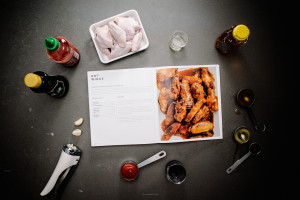 Easy Gourmet Hot Wings and a Giveaway!
 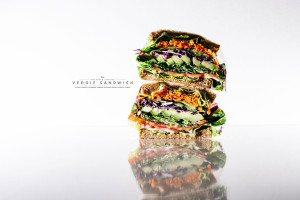 The Ultimate Veggie Sandwich
 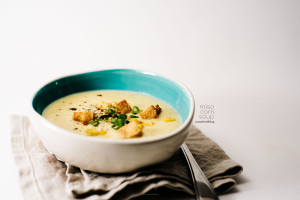 Vegan(!) Creamy Corn Soup Recipe
  Sunday Brunch: Grilled Cheese Eggs Benny